Indoor vs Outdoor Pickleball Courts | Best Pickleballs
The article explores the key differences between indoor and outdoor pickleball courts, addressing various aspects such as construction, maintenance, playing experience, equipment considerations, facility management, and environmental impact. Indoor courts offer a controlled environment with consistent playing conditions year-round but come with higher operational costs and potential space limitations. Outdoor courts provide a connection to nature and often lower construction costs but face weather-related challenges and more demanding maintenance.
The article discusses the specific characteristics of indoor and outdoor pickleball balls, emphasizing the need for players to adjust their techniques when switching between environments. It also covers facility management aspects, legal and environmental considerations, and future trends in court design and technology. Ultimately, the choice between indoor and outdoor courts depends on factors like climate, available space, budget, and player preferences, with many communities benefiting from offering both options.
#1 Pickball Paddles Set of 2 | #1 Pickball Paddles Set of 4 | #1 Pickball Single Paddle |
 3000+ Reviews Free Shipping at Amazon.com |  200+ Reviews Free Shipping at Amazon.com |  800+ Reviews Free Shipping at Amazon.com |
Indoor vs Outdoor Pickleball Courts: Choosing the Right Playing Environment
Pickleball, a sport that combines elements of tennis, badminton, and table tennis, has experienced a meteoric rise in popularity since its inception in 1965. As the game continues to attract players of all ages, the debate between indoor and outdoor pickleball courts has become increasingly relevant. Both environments offer unique advantages and challenges, impacting everything from gameplay to facility management. This article explores the key differences between indoor and outdoor pickleball courts, helping players and facility managers make informed decisions.
Court Construction and Maintenance
Indoor Pickleball Courts:
Indoor courts provide a controlled environment, free from weather-related challenges. These courts typically feature specialized flooring materials that offer an optimal balance of grip and slide for players. The consistent surface allows for more predictable ball bounces and player movements. Maintenance for indoor courts primarily involves regular cleaning and occasional resurfacing, which is generally less frequent than outdoor courts.
However, the construction of indoor facilities can be more expensive initially, requiring considerations for lighting, climate control, and ventilation systems. The need for a dedicated indoor space may also limit the number of courts available in a given area.
Outdoor Pickleball Courts:
Outdoor courts, while more susceptible to weather conditions, offer a connection to nature and often lower construction costs. These courts require weather-resistant surfaces that can withstand various climate conditions while providing consistent play. Asphalt or concrete bases with acrylic surfacing are common choices, offering durability and proper ball bounce.
Maintenance for outdoor courts is more demanding, as they are exposed to the elements. Regular cleaning, crack repair, and resurfacing are necessary to maintain optimal playing conditions. Proper drainage systems are essential to prevent water accumulation and ensure quick drying after rain.
Playing Experience
Indoor Pickleball:
The controlled environment of indoor courts allows for consistent gameplay year-round. Players enjoy stable lighting conditions, no wind interference, and comfortable temperatures. This consistency can lead to more precise shot-making and strategy development.
However, indoor play may lack the fresh air and natural light that many players enjoy. The enclosed space can also amplify noise, requiring acoustic treatments to manage sound levels. Some players find the indoor environment less social, as the defined space can limit interactions between courts.
Outdoor Pickleball:
Outdoor play offers a more varied and often more challenging experience. Players must adapt to changing weather conditions, including wind, sun glare, and temperature fluctuations. This variability can enhance players’ skills by forcing them to adjust their techniques constantly.
The open-air environment promotes a more social atmosphere, allowing for easier interactions between courts and a community feel. However, outdoor play is subject to weather disruptions, which can lead to canceled games or inconsistent playing schedules.
Equipment Considerations
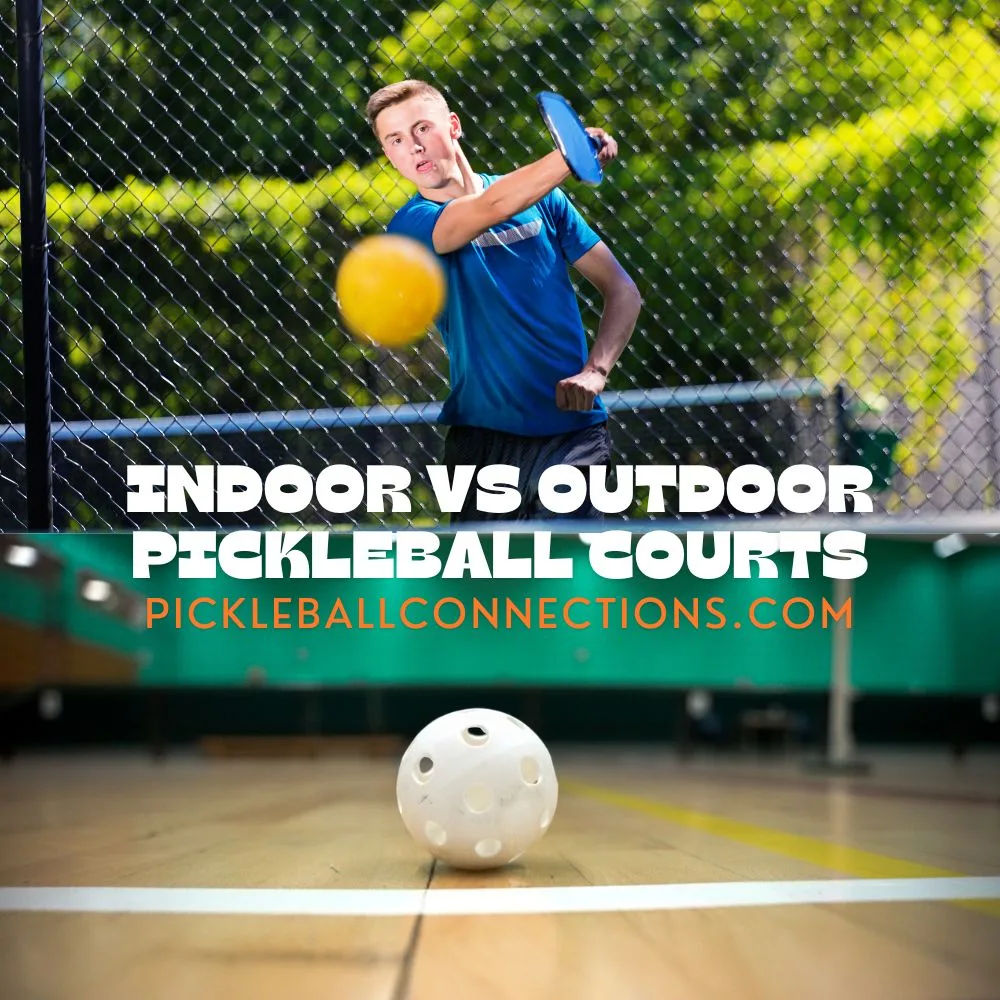
One of the most significant differences between indoor and outdoor pickleball is the type of ball used. Indoor pickleballs typically have 26 larger holes, while outdoor balls have 40 smaller holes. This design difference affects the ball’s flight characteristics and wind resistance.
Indoor Balls:
- Lighter and softer
- Larger holes for reduced air resistance
- Better suited for the controlled indoor environment
- Generally have a longer lifespan due to less exposure to harsh conditions
Outdoor Balls:
- Slightly heavier and made of harder materials
- Smaller holes to resist wind interference
- More durable against outdoor elements
- Provide more consistent bounce on rougher outdoor surfaces
Players must adjust their techniques when switching between indoor and outdoor play due to these equipment differences. The choice of footwear also varies, with indoor shoes focusing on grip and quick movements on smooth surfaces, while outdoor shoes prioritize durability and traction on rougher courts.
Facility Management and Accessibility
Indoor Facilities:
Managing indoor pickleball courts often involves implementing reservation systems to handle demand efficiently. These facilities can offer consistent playing times regardless of weather conditions, making them particularly valuable in regions with extreme climates. Indoor courts also provide opportunities for nighttime play without the need for outdoor lighting systems.
The challenges for indoor facilities include higher operational costs due to lighting, heating, and cooling requirements. Space limitations may also restrict the number of courts available, potentially leading to longer wait times during peak hours.
Outdoor Facilities:
Outdoor courts generally offer more flexible usage policies, often allowing for drop-in play. They typically have lower operational costs, particularly in terms of energy usage. Many communities find it easier to convert existing outdoor spaces, such as tennis courts, into pickleball courts, making them a cost-effective option for expanding playing opportunities.
However, outdoor facilities face challenges related to weather disruptions, seasonal usage fluctuations, and potential conflicts with nearby residents due to noise. Lighting for nighttime play can also be a contentious issue in residential areas.
Legal and Environmental Considerations
Both indoor and outdoor pickleball courts must comply with various regulations. Outdoor courts, in particular, may face zoning restrictions and noise ordinances that limit playing hours or require sound mitigation strategies. Insurance considerations also differ, with outdoor courts potentially facing higher liability due to environmental factors.
From an environmental perspective, indoor courts generally have a higher energy footprint due to climate control and lighting needs. Outdoor courts, while requiring less operational energy, may have a greater impact on water usage for maintenance, especially in dry climates. Both types of facilities are increasingly adopting sustainable practices, such as using recycled materials in court construction and implementing energy-efficient systems.
Future Trends
The future of pickleball courts points towards greater flexibility and innovation. Hybrid court designs that can adapt to both indoor and outdoor play are being explored, offering the best of both worlds. Portable and temporary court solutions are gaining popularity, allowing for pop-up events and maximizing space usage in multi-use facilities.
Technological advancements are also shaping the future of pickleball facilities. Smart court technologies that track player movements and ball trajectories are being developed, offering data-driven insights for players and coaches. Online reservation systems and digital scorekeeping are becoming standard features, enhancing the overall player experience.
Conclusion
The choice between indoor and outdoor pickleball courts depends on a variety of factors, including climate, available space, budget, and player preferences. Indoor courts offer consistency and year-round play, while outdoor courts provide a connection to nature and often lower construction costs. Many communities find value in offering both options, allowing players to enjoy the sport in various settings and conditions.
While both environments have their advantages, they also present unique challenges. Indoor facilities must contend with higher operational costs and potential space limitations, while outdoor courts face weather-related disruptions and maintenance issues. Regardless of the chosen environment, the key to an optimal pickleball experience lies in using appropriate equipment and adapting playing styles to suit the conditions.
As pickleball continues to grow in popularity, the development of both indoor and outdoor facilities will likely continue, with innovations aimed at enhancing player experience and addressing current limitations. Ultimately, the diversity of playing options contributes to the sport’s accessibility and appeal, ensuring that pickleball can be enjoyed by players of all skill levels in a variety of settings.
#1 Pickball Balls | #1 Pickball Bag | #1 Pickball Portable Net |
 19500+ Reviews Free Shipping at Amazon.com |  2600+ Reviews Free Shipping at Amazon.com |  1800+ Reviews Free Shipping at Amazon.com |
Summary and FAQs
Can I use indoor pickleball balls on outdoor courts and vice versa?
Let me break down the key differences between indoor and outdoor pickleball balls and explain their interchangeability:
Indoor Pickleball Balls:
Characteristics
- 26 larger holes
- Lighter construction
- Softer material
- Less wind resistance
- Better for controlled environments
Performance Outdoors
- More affected by wind
- May crack faster on rough surfaces
- Less predictable bounce outdoors
- Shorter lifespan in outdoor conditions
- Not recommended for outdoor use
Outdoor Pickleball Balls:
Characteristics
- 40 smaller holes
- Slightly heavier
- Harder material
- Wind resistant design
- Durable construction
Performance Indoors
- May be too fast
- Harder to control
- Louder on indoor surfaces
- More aggressive bounce
- Can be used but not optimal
Why You Shouldn’t Mix Them:
Performance Issues
- Ball flight differences
- Bounce inconsistencies
- Control challenges
- Speed variations
- Spin response differences
Durability Concerns
- Premature wear
- Potential damage
- Reduced lifespan
- Cost inefficiency
- Performance degradation
Best Practice Recommendation:
- Use indoor balls for indoor play
- Use outdoor balls for outdoor play
- Keep separate sets for each environment
- Follow manufacturer specifications
- Consider court surface when selecting balls
This separation ensures:
Cost effectiveness
Optimal performance
Longer ball life
Better game quality
Consistent play
Which is more expensive to maintain – indoor or outdoor pickleball courts?
Let me break down the maintenance costs and considerations for both indoor and outdoor pickleball courts:
Indoor Court Maintenance Costs:
Regular Operating Expenses
- Climate control (HVAC)
- Lighting systems
- Ventilation
- Energy bills
- Building insurance
Facility Maintenance
- Regular cleaning
- Floor care
- Less frequent resurfacing
- Interior repairs
- Climate control maintenance
Long-term Costs
- Equipment replacement
- Building repairs
- System upgrades
- Structural maintenance
- Insurance premiums
Outdoor Court Maintenance Costs:
Regular Maintenance
- Surface cleaning
- Crack repairs
- Line repainting
- Drainage system upkeep
- More frequent resurfacing
Weather-Related Expenses
- Storm damage repairs
- Sun damage treatment
- Drainage issues
- Wind damage
- Seasonal preparation
Additional Considerations
- Lighting for night play
- Fencing repairs
- Windscreen replacement
- Court covers (if used)
- Landscape maintenance
Cost Comparison:
Initial Investment
Indoor: Higher
- Building construction
- Climate control systems
- Specialized flooring
- Lighting installation
Outdoor: Lower
- Basic court construction
- Simple drainage systems
- Standard surfacing
- Basic amenities
Ongoing Costs
Indoor: More Predictable
- Consistent utility expenses
- Scheduled maintenance
- Controlled environment
- Less weather impact
Outdoor: More Variable
- Weather-dependent repairs
- Seasonal maintenance
- Unpredictable damages
- Environmental factors
Conclusion:
While indoor courts have higher initial costs and consistent operating expenses, outdoor courts typically require more frequent maintenance and unexpected repairs. Overall, indoor courts are generally more expensive to maintain when considering total operational costs, but outdoor courts may have more variable and unpredictable maintenance expenses due to environmental factors.
Key Factors Affecting Cost:
- Location/Climate
- Usage Level
- Construction Quality
- Maintenance Schedule
- Local Resources
This analysis suggests that while indoor courts have higher predictable costs, outdoor courts might be more economical in suitable climates with proper maintenance planning.
Are there any health considerations when choosing between indoor and outdoor pickleball play?
Let me break down the health considerations for both indoor and outdoor pickleball play:
Indoor Pickleball Health Factors:
Environmental Control Benefits
- Consistent temperature
- No UV exposure
- Weather protection
- Controlled humidity
- Even lighting conditions
Respiratory Considerations
- Limited air circulation
- Potential dust accumulation
- Shared air space
- Possible allergies
- HVAC-related issues
Joint Impact
- Consistent surface
- Controlled temperature for muscles
- Predictable movement conditions
- Lower risk of slipping
- Engineered shock absorption
Outdoor Pickleball Health Factors:
Natural Environment Benefits
- Fresh air circulation
- Vitamin D exposure
- Natural light
- Open space
- Better ventilation
Weather-Related Considerations
- UV exposure risks
- Heat exhaustion potential
- Cold weather stress
- Wind effects
- Humidity impact
Physical Adaptations
- Variable surface conditions
- Temperature fluctuations
- Weather adaptation
- More dynamic movement
- Natural light adjustment
Common Health Considerations for Both:
Physical Benefits
- Cardiovascular exercise
- Muscle engagement
- Balance improvement
- Hand-eye coordination
- Social interaction
Safety Considerations
Indoor:
- Proper footwear
- Court spacing
- Air quality
- Noise levels
- Emergency access
Outdoor:
- Sun protection
- Hydration
- Weather awareness
- Temperature management
- Surface conditions
Recommendations for Health-Conscious Players:
Indoor Play
- Use appropriate indoor shoes
- Stay hydrated
- Take regular breaks
- Watch for overheating
- Monitor air quality
Outdoor Play
- Apply sunscreen
- Wear sun protection
- Increase hydration
- Monitor temperature
- Use weather-appropriate gear
Best Practices for Health:
General Safety
- Proper warm-up
- Regular breaks
- Hydration
- Appropriate gear
- Listen to your body
Environmental Adaptation
- Adjust playing style
- Monitor conditions
- Prepare accordingly
- Stay aware
- Follow safety guidelines
Making the Choice:
Consider Personal Factors:
- Pre-existing conditions
- Weather sensitivity
- Joint issues
- Respiratory concerns
- UV sensitivity
Seasonal Considerations:
- Summer heat
- Winter cold
- Spring allergies
- Fall conditions
- Local climate
This comprehensive understanding helps players make informed decisions based on their individual health needs and local conditions.
How do noise levels compare between indoor and outdoor pickleball courts?
Let me break down the noise level comparison between indoor and outdoor pickleball courts:
Indoor Pickleball Noise Characteristics:
Sound Amplification
- Echo effects
- Concentrated noise
- Sound reverberation
- Enclosed space impact
- Multiple court overlap
Contributing Factors
- Hard surfaces
- Ceiling height
- Court proximity
- Building materials
- Ventilation systems
Noise Sources
- Ball impacts
- Player calls/voices
- Paddle hits
- Footwork sounds
- Spectator noise
Outdoor Pickleball Noise Characteristics:
Sound Dispersion
- Natural dissipation
- Open-air advantage
- Less echo
- Wider sound spread
- Environmental absorption
Environmental Factors
- Wind effect on sound
- Background noise
- Natural buffers
- Distance factors
- Atmospheric conditions
Noise Level Comparison:
Indoor Courts
Advantages:
- Controlled environment
- Predictable acoustics
- Opportunity for sound treatment
Disadvantages:
- More intense sound levels
- Echo issues
- Confined noise
- Multiple court overlap
- Limited dispersion
Outdoor Courts
Advantages:
- Natural sound dispersion
- Less echo
- Lower perceived volume
- Better sound distribution
Disadvantages:
- Sound travel to neighbors
- Wind-carried noise
- Variable conditions
- Community impact
Mitigation Strategies:
Indoor Solutions
- Acoustic panels
- Sound-absorbing materials
- Strategic court spacing
- Ceiling treatments
- Wall buffers
Outdoor Solutions
- Natural barriers
- Distance buffers
- Fencing materials
- Strategic orientation
- Vegetation barriers
Best Practices for Noise Management:
Facility Design
Indoor:
- Sound-absorbing materials
- Strategic layout
- Proper insulation
- Ceiling treatment
- Wall treatments
Outdoor:
- Buffer zones
- Barrier placement
- Court orientation
- Distance planning
- Natural screening
Operational Considerations
- Playing hours
- Court scheduling
- Number of courts
- Player education
- Community relations
This analysis suggests that while indoor courts may have more intense concentrated noise, outdoor courts might have broader noise distribution affecting surrounding areas. Each environment requires specific noise management strategies for optimal play conditions.
Which type of court is better for tournament play – indoor or outdoor?
Indoor Courts Advantages for Tournaments:
- Consistent playing conditions (no weather disruptions)
- Predictable ball bounces and player movements
- Controlled lighting conditions
- Year-round availability
- No wind interference affecting shot precision
- Temperature-controlled environment
Outdoor Courts Advantages for Tournaments:
- Often more space available for multiple courts
- Better natural visibility
- More social atmosphere
- Better ventilation for large crowds
- Often more cost-effective for organizers
- Easier to accommodate spectators
Based on these factors, indoor courts would generally be preferable for high-level tournament play because they:
- Eliminate weather-related variables that could affect match outcomes
- Provide consistent conditions that allow players to perform at their peak
- Ensure tournaments can proceed as scheduled without weather delays
- Allow for more precise shot-making and strategy execution