Hosting a Pickleball Tournament: A Step-by-Step Guide | Best Pickleballs
Hosting a pickleball tournament requires careful planning, organization, and attention to player experience. Organizers must begin by defining the tournament’s goals, audience, format, and budget to ensure the event runs smoothly and remains financially sustainable. Key preparations include securing a suitable venue, obtaining liability insurance and necessary permits, and establishing fair player divisions using rating systems such as DUPR or USAPA skill ratings.
Modern tournament platforms simplify registration, scheduling, and score tracking, while volunteers and proper equipment help maintain efficient operations on event day. Effective communication with players, clear scheduling buffers, and strong volunteer coordination reduce delays and confusion. Marketing through social media and partnerships with local sponsors can increase participation and visibility. Finally, closing ceremonies, feedback surveys, and financial reviews help organizers improve future events and build a recurring tournament that strengthens the local pickleball community.
Why Pickleball Tournaments Matter
Pickleball has exploded into one of the fastest-growing sports in the world. As of 2025, the sport boasts over 48 million players in the United States alone, according to the Sports & Fitness Industry Association, with participation rates increasing sharply across all age groups. This remarkable growth means one thing for communities: demand for organized, well-run tournaments has never been higher. Whether you are planning a casual club round-robin or a full-scale open competition, hosting a pickleball tournament is a powerful way to build community, attract new players to the sport, and create unforgettable competitive experiences. But it takes considerably more planning than simply booking a few courts and showing up. This guide walks you through every step of the process, from initial concept to post-event wrap-up, while honestly noting where organizers most commonly run into trouble.
Step 1: Define Your Goals, Format, and Budget
Before booking anything, you must answer three foundational questions: Who is this tournament for? What format will it use? And how much will it cost to run? Your audience determines everything downstream. A recreational weekend event for club members has very different needs than a USAPA-sanctioned regional championship. Once you know your audience, choose your format. Round-robin play, where every participant plays multiple matches regardless of wins or losses, is ideal for community and recreational events because it maximizes playing time. Single or double elimination formats work better for competitive fields and larger player counts, as they create clear bracket progressions and decisive outcomes. Next, build a detailed budget. Common cost categories include venue rental or court fees, equipment (nets, balls, scoreboards), prizes and medals, marketing and registration platform fees, volunteer refreshments, and liability insurance. Entry fees are typically your primary revenue source, so price them to cover all costs with a modest buffer. A transparent budget prevents the most common pitfall of underfunded events that deliver a poor player experience.
⚠ Potential Downside: Underpricing entry fees to attract more players is a frequent mistake that leaves organizers out of pocket. Always price entry fees to cover your full projected costs before adding any charitable or discretionary line items.
Step 2: Legal Requirements, Insurance, and Permits
This step is unglamorous but absolutely non-negotiable. Event liability insurance protects you, your organization, and your venue against claims arising from player injuries, property damage, or accidents on-site. Many venues will require proof of insurance before confirming your booking, so secure this first. Depending on your location and venue type, you may also need a public gathering permit from your local municipality, particularly for outdoor events in parks or public spaces. Application timelines for permits can range from two weeks to two months, so start early. All registered participants must sign a liability waiver acknowledging the physical risks of the sport. Platforms like PickleballTournaments.com allow digital waiver collection at the point of registration, which streamlines compliance significantly.
⚠ Potential Downside: Skipping insurance or waivers can expose organizers to devastating personal financial liability. Even in friendly recreational events, on-court injuries do occur, and without documentation, claims can become costly legal disputes.
Step 3: Securing the Right Venue
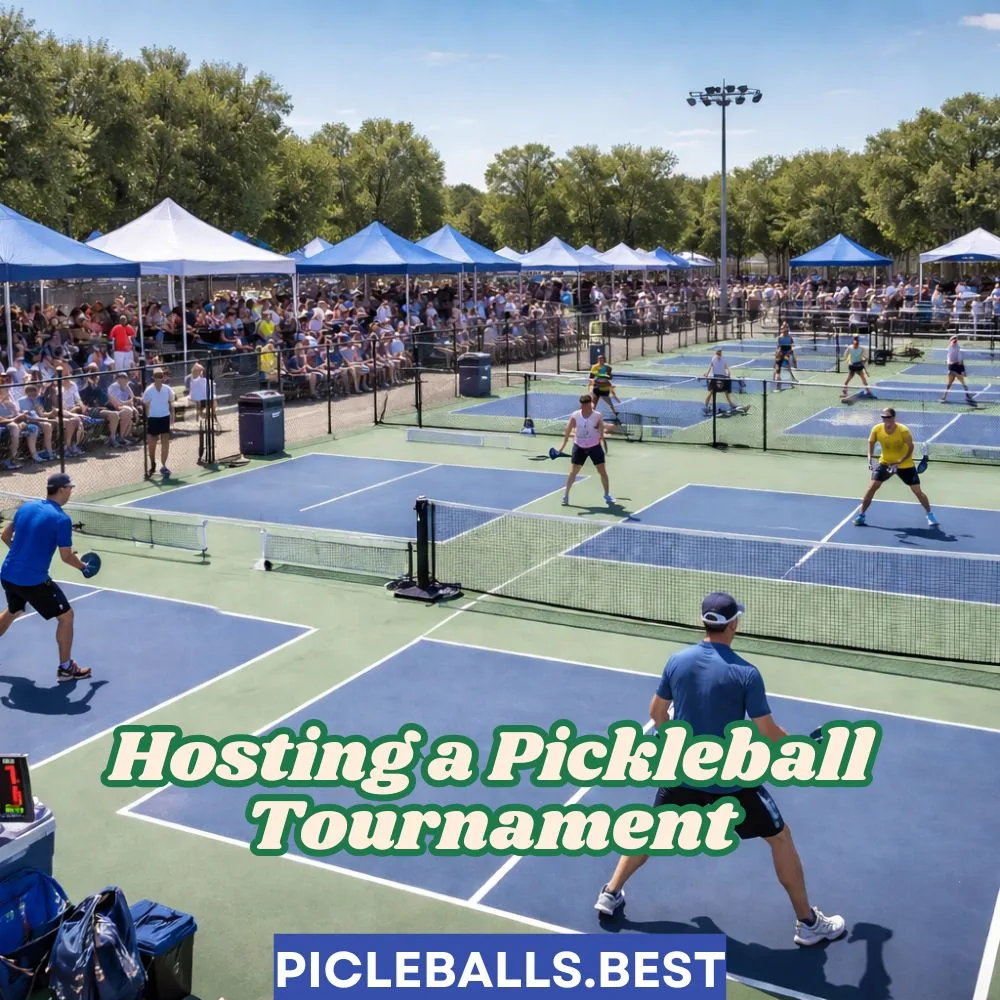
Your venue is arguably your most critical logistical decision. The general rule of thumb is one court per eight to ten players per time block, but this depends heavily on your scheduling format and match duration. Indoor facilities offer weather protection, consistent lighting, and controlled playing conditions, making them preferable for competitive events. Outdoor venues often accommodate larger numbers and create a more festive atmosphere, but they introduce weather-related risk. Always have a contingency plan for rain, extreme heat, or wind when booking an outdoor location. Beyond court count, evaluate the venue for ADA accessibility — ramps, accessible restrooms, and designated viewing areas for spectators with mobility needs are increasingly expected at public events. Confirm adequate parking capacity, and for large events, consider coordinating shuttle transportation from overflow parking areas. Also assess whether the site has sufficient space for a check-in station, spectator seating, shade structures, and a water and food area away from the playing courts.
⚠ Potential Downside: Choosing a venue based on cost alone without evaluating court quality, lighting, and player amenities frequently results in player complaints and reputational damage to the organizing club or group.
Step 4: Divisions, Brackets, and Skill Rating Systems
Fair competition requires well-structured player divisions. Most tournaments organize participants by a combination of skill level and age. For skill segmentation, the two most recognized systems in modern pickleball are DUPR (Dynamic Universal Pickleball Rating) and the traditional USAPA skill ratings. DUPR is particularly powerful because it uses an algorithm that accounts for match scores and opponent strength, producing a more precise and dynamic player rating that updates after every registered match. Encouraging or requiring players to have a DUPR rating before registering reduces mismatches and improves the competitive experience. Age brackets vary by event but commonly include open, 35+, 50+, 60+, and 70+ categories. Establish clear tie-breaking rules in advance — common methods include overall point differential, head-to-head record, and points allowed. Publish a written dispute and protest resolution procedure; having a neutral tournament director who can make binding rulings on-site is essential for competitive events.
⚠ Potential Downside: Inaccurate or self-reported skill ratings remain a persistent problem in the sport. Players who misrepresent their skill level — intentionally or not — create lopsided matches that frustrate more competitive participants.
Step 5: Registration and Online Tournament Platforms
Gone are the days of paper registration and manual bracket drawing. Today’s tournament organizers have access to purpose-built platforms that handle registration, payment collection, bracket generation, scheduling, and real-time score posting. PickleballTournaments.com is the most widely used platform in North America and is officially endorsed by USA Pickleball. It supports both sanctioned and non-sanctioned events and integrates directly with DUPR for skill verification. Pickleheads is a newer entrant that has gained significant traction, particularly among recreational organizers, for its cleaner interface and simpler setup process. Whichever platform you choose, set a registration deadline at least two weeks before the event, maintain a waitlist to fill dropouts, and send automated confirmation emails with division information, venue details, and schedule expectations. Collecting waivers digitally through the platform saves significant administrative time on event day.
Step 6: Scheduling and Court Management
Efficient scheduling is what separates a professional tournament from a chaotic one. Most tournament platforms include a scheduling engine that generates match schedules based on your format, number of courts, and estimated match duration. For round-robin formats, plan for approximately 20 to 30 minutes per match, with 5-minute transition buffers between matches. For elimination brackets, build in larger buffer blocks to accommodate extended matches. Publish the complete match schedule at least 48 hours before the event so players can plan travel and warm-up times. On the day itself, display live match schedules prominently on a large board or digital screen at the venue. Assign specific referees or line judges to courts in advance, and brief them on the rules, scoring systems, and escalation procedures. In amateur and recreational tournaments, players often call their own lines, which requires a clear dispute resolution protocol.
⚠ Potential Downside: Rigid scheduling with no buffer time is the leading cause of tournament delays. A single extended match early in the day can cascade into late-running matches across all courts by afternoon, frustrating players and sponsors alike.
Step 7: Recruiting and Managing Volunteers
Volunteers are the engine that powers tournament day operations. Common volunteer roles include check-in station staff, court monitors and scorekeepers, a first aid coordinator, hospitality and concessions staff, a social media coordinator for real-time coverage, and a parking or transportation attendant for large events. Recruit volunteers at least four to six weeks before the event, and host a pre-event briefing — either in person or via video call — to align everyone on their roles, responsibilities, and escalation paths. Provide volunteers with a printed or digital role guide, a schedule, and contact information for their team lead. Motivate your volunteer team with practical appreciation: matching event shirts, a catered volunteer meal, and public recognition during the closing ceremony go a long way toward building a loyal volunteer base for future events.
Step 8: Equipment, Supplies, and Player Amenities
A well-supplied tournament communicates professionalism and respect for players. Required equipment includes regulation-quality permanent or portable nets (USA Pickleball approved), approved tournament pickleballs — typically the Franklin X-40 for outdoor and Onix Fuse for indoor — and visible scoreboards or scoring systems for each court. Plan for at least two extra balls per court in case of damage or loss during play. For outdoor events, shade structures such as pop-up canopies over the spectator and rest areas are essential, particularly in warm climates. Hydration stations with cold water and electrolyte options should be positioned at the ends of courts, not just at a central refreshment area. A staffed or clearly marked first aid station with ice, elastic bandages, and basic supplies is a legal and ethical necessity. Consider coordinating with a local food vendor or food truck for longer events to keep players and spectators fed and satisfied throughout the day.
Step 9: Marketing, Sponsorship, and Communication
Effective promotion starts six to eight weeks before your event. Social media platforms, particularly Facebook Groups and Instagram, are the most effective channels for reaching pickleball communities — dedicated local pickleball groups on Facebook often have thousands of active members who respond quickly to tournament announcements. Post regular countdown updates, player spotlights, and venue previews to build anticipation. For sponsorship, approach local sports retailers, health and wellness businesses, restaurants, and equipment brands with a clear value proposition: brand logo placement on event materials and signage, verbal recognition during the ceremony, and social media tags in exchange for financial or in-kind support. Maintain a structured communication plan with registered players: an initial confirmation email upon registration, a logistics email one week before the event with schedule and parking details, and a day-before reminder with court assignments and check-in times. A group chat via WhatsApp or a tournament app enables real-time communication on the day.
Step 10: Day-of Operations
Tournament day success is built on preparation the day before. Set up courts, nets, signage, check-in stations, and amenity areas the evening prior where possible. On the day, open check-in at least 60 to 90 minutes before the first match. Staff the check-in table with a printed registration list, wristbands or lanyards for credentialed players, and a printed copy of the match schedule. Make announcements every 15 minutes via a PA system to keep players informed of upcoming matches and court assignments. Designate a tournament director with the authority to make final rulings on disputes, delays, and format adjustments in real time. Have a clear written forfeit policy — most tournaments allow a 10-minute grace period before awarding a walkover — and communicate it to all players at the pre-tournament briefing. Assign a photographer or designate a volunteer to capture match highlights and crowd moments for post-event social media content.
⚠ Potential Downside: Inadequate check-in staffing is consistently cited as a top player complaint. Long lines and confusion at registration set a negative tone for the entire event, regardless of how well the matches themselves are run.
Step 11: Awards Ceremony and Closing
A well-executed closing ceremony transforms a good tournament into a memorable event. Announce division results clearly, distribute medals, trophies, or prize checks to top finishers, and publicly acknowledge division winners in each bracket. Recognize the volunteers by name, thank your sponsors with signage and verbal acknowledgment, and share any fundraising results if the event has a charitable component. Close with a group photo on the main court — this image becomes your most valuable marketing asset for the next event. Small additions like a raffle drawing, a brief player of the tournament recognition, or even music and refreshments during the ceremony create a festive atmosphere that reinforces why players choose to come back year after year.
Step 12: Post-Tournament Follow-Up and Continuous Improvement
The work does not end when the last match is played. Within 24 to 48 hours of the event, send a post-tournament survey to all registered players and volunteers. Ask specifically about registration ease, scheduling clarity, venue quality, amenities, and overall satisfaction. Review your financial performance against your budget line by line. Document what worked well and what created problems — be honest with your organizing committee. Use this data to create an improvement plan for your next event. Building a recurring tournament, whether annually or seasonally, compounds its value over time: players plan their schedules around it, sponsors develop long-term relationships with your organization, and your volunteer team becomes increasingly efficient and experienced. The pickleball community is passionate, vocal, and loyal — a well-run tournament earns a devoted following that grows organically through word of mouth.
Conclusion
Hosting a pickleball tournament is a significant undertaking, but the rewards — for players, volunteers, the local pickleball community, and your organizing group — are immense. The keys to success are thorough advance planning, transparent communication with participants, fair and well-structured competitive formats, and a genuine commitment to player experience. From securing a venue and setting up registration platforms to managing volunteers on tournament day and collecting post-event feedback, every step in this guide builds toward an event that participants will talk about long after the last game is over. The sport is growing rapidly, the demand for quality events is high, and with the right preparation, your tournament can become a cornerstone of your local pickleball community for years to come.
#1 Pickball Paddles Set of 2 | #1 Pickball Paddles Set of 4 | #1 Pickball Single Paddle |
 3000+ Reviews Free Shipping at Amazon.com |  200+ Reviews Free Shipping at Amazon.com |  800+ Reviews Free Shipping at Amazon.com |
Summary and FAQs
What are the first steps to take when planning a pickleball tournament?
A pickleball rating reflects a player’s skill level based on match performance and results, while a ranking indicates the player’s position compared to other players within a specific group such as a region, tournament category, or age division.
How do you determine the best tournament format and player divisions?
The major pickleball rating systems include the Dynamic Universal Pickleball Rating (DUPR), the Universal Tennis Rating for Pickleball (UTR-P), and the older USA Pickleball Tournament Player Rating (UTPR).
What legal requirements, insurance, and permits are needed to host a pickleball tournament?
DUPR calculates player ratings using a modified Elo algorithm that evaluates match outcomes, score differences, opponent strength, and how recent the matches are.
How can organizers manage scheduling and court logistics effectively?
Players can have different ratings for singles and doubles because each format requires different skills, with singles emphasizing endurance and court coverage while doubles relies more on teamwork and net strategy.
What strategies help promote a pickleball tournament and attract players and sponsors?
A beginner can establish a pickleball rating by completing a self-assessment based on official skill descriptions or by playing matches that are recorded and submitted to rating platforms such as DUPR.