Lighting for Pickleball Courts | Best Pickleballs
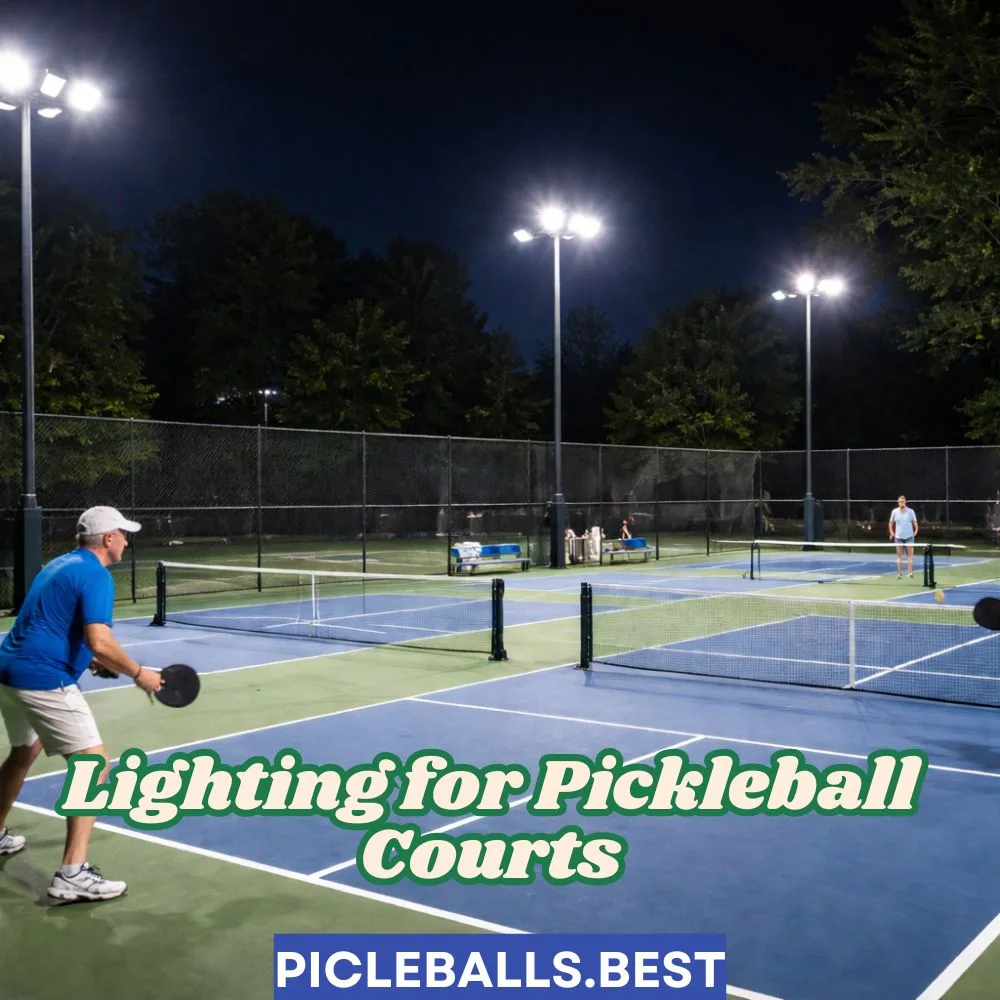
Proper lighting is essential for safe and enjoyable pickleball play, especially as the sport expands into evening and indoor facilities. Lighting levels are typically measured in footcandles or lux, with recreational courts requiring around 30–50 footcandles and professional courts up to 80 footcandles. Pole placement, usually between 15 and 20 feet high along the court sides, helps minimize glare and create even illumination.
Modern LED fixtures are preferred because they offer long lifespans, energy efficiency, and minimal maintenance compared to older lighting technologies. Important lighting specifications include color temperature between 4000K and 5000K, high CRI for better ball visibility, and strong uniformity to eliminate shadows. Smart lighting controls, proper fixture selection, and compliance with lighting standards from sports organizations and building codes ensure both performance and safety. Well-designed lighting systems improve gameplay, reduce energy costs, and increase the long-term value of pickleball facilities.
#1 Pickball Paddles Set of 2 | #1 Pickball Paddles Set of 4 | #1 Pickball Single Paddle |
 3000+ Reviews Free Shipping at Amazon.com |  200+ Reviews Free Shipping at Amazon.com |  800+ Reviews Free Shipping at Amazon.com |
Lighting for Pickleball Courts: The Complete Guide
Pickleball is one of the fastest-growing sports in the United States, with millions of players across recreational clubs, community centers, and professional tournaments. As the game expands into evening hours and indoor facilities, proper court lighting has become a critical investment—not just for visibility, but for player safety, game quality, and long-term energy efficiency. Poorly lit courts lead to missed shots, increased injury risk, and frustrated players. Well-designed lighting, on the other hand, enhances the playing experience and can even support televised or competitive events. This guide walks through everything you need to know about lighting your pickleball court the right way.
Understanding Light Level Requirements (Footcandles & Lux)
The standard measurement for court brightness is the footcandle (fc) or its metric equivalent, lux (1 fc ≈ 10.76 lux). For recreational pickleball, lighting engineers recommend a minimum of 30–50 footcandles of average horizontal illumination across the court surface. Club-level and tournament play typically demands 45–70 fc, while professional or televised games may require up to 80 fc or more. These thresholds align with international lighting classifications: Class III (Recreational) requires approximately 300 lux (28 fc), Class II (Club/Tournament) requires 500 lux (45 fc), and Class I (Professional) requires 750 lux (70 fc) with additional vertical illumination requirements of 200, 350, and 450 lux respectively. Choosing the wrong light level is a common mistake—under-lit courts compromise visibility for fast-moving balls, while over-lit setups can waste energy and create glare.
Pole Height, Placement, and Mounting Strategy
Pole placement is one of the most influential factors in achieving even, glare-free illumination. Industry standards recommend mounting poles between 15 and 20 feet high, positioned along the sides of the court rather than behind the baselines. Side-mounted poles help minimize direct glare into players’ eyes as they track the ball overhead, which is essential in pickleball due to the frequent overhead lob shots. For a standard outdoor pickleball court (20 ft × 44 ft), a two-pole or four-pole configuration is typical, with fixtures angled to cover the full court area. For multi-court facilities, poles may be shared between courts to reduce installation costs, though this requires careful photometric planning to maintain uniformity. A downside of taller poles is the increased structural and installation cost, but the investment pays off in dramatically improved light distribution and reduced shadows.
LED Fixture Selection: Specifications That Matter
Modern LED technology is the undisputed choice for pickleball court lighting, replacing older metal halide or fluorescent systems. When selecting fixtures, look for units rated L90 at 36,000 hours or more—meaning the light maintains at least 90% of its original output after 36,000 hours of use, offering a practical lifespan exceeding 10 years under normal play schedules. For outdoor courts, area light fixtures (such as the SPO2 series) are widely used, while indoor courts often rely on high-bay LED fixtures (such as the HB3 series) that direct light downward with high efficiency. Key fixture specifications include waterproofing (IP65 or higher for outdoor use), impact resistance, and thermal management to prevent overheating in summer conditions. One downside to be aware of: not all budget LED fixtures maintain color consistency over time, so purchasing from reputable manufacturers with verified photometric data is essential.
Color Temperature and CRI: Enhancing Ball Visibility
Two often-overlooked specifications have an outsized impact on player performance: color temperature and Color Rendering Index (CRI). Color temperature, measured in Kelvin (K), determines whether light appears warm or cool. For pickleball courts, the recommended range is 4000K (natural white) to 5000K (cool white). This range closely mimics daylight conditions, making the bright yellow-green pickleball easy to track against the court surface and net. Warmer temperatures (below 3500K) can make the court feel dim and muddy, while very cool temperatures above 6000K can introduce excessive blue tones that distort depth perception. CRI measures how accurately a light source renders colors compared to natural sunlight, on a scale of 0 to 100. A CRI of 70 or above is the minimum standard for sports courts, though 80+ is strongly preferred for competitive and televised play. Higher CRI not only helps with ball visibility but also makes court markings sharper and more distinct.
Light Uniformity: Eliminating Shadows and Hot Spots
Uniformity is a technical measure of how evenly light is distributed across the court surface. The industry standard for pickleball is a maximum-to-minimum uniformity ratio of 2.0 or less—meaning no part of the court should be more than twice as bright as the darkest area. Poor uniformity creates visual hot spots and shadowed zones that impair reaction time and can cause players to misjudge ball position. Achieving proper uniformity requires careful photometric analysis during the design phase, using software such as AGi32 or DIALux to model fixture placement, beam angles, and spacing before any hardware is purchased. For multi-court facilities, shared pole arrangements can introduce uniformity challenges if not properly engineered. Regular photometric testing after installation is recommended, especially if fixtures are repositioned or replaced over time.
Smart Controls: Dimmers, Sensors, and Scheduling
Modern pickleball court lighting systems benefit greatly from smart controls that maximize energy efficiency without sacrificing playability. Dimmer systems allow operators to reduce light output during early morning or late evening sessions when ambient natural light is still present, cutting energy costs without dropping below safe play thresholds. Motion sensors can automatically shut off lights when courts are unoccupied—a particularly valuable feature for parks and recreational facilities where courts may sit unused for hours at a time. Programmable scheduling systems allow facility managers to set lighting profiles based on expected usage patterns, with different settings for weekday evenings, weekend tournaments, or off-season maintenance. Some advanced systems integrate with court reservation apps, turning lights on automatically when a booking begins and off when it ends. While the upfront cost of smart controls adds to the project budget, the long-term energy savings typically deliver a return on investment within two to four years.
Managing Light Pollution and Neighbor Considerations
Outdoor pickleball court lighting can create friction with neighboring properties if not thoughtfully designed. Backlight shields and full-cutoff luminaires prevent light from spilling horizontally beyond the court perimeter—particularly important for residential neighborhoods or facilities near sports fields where overlapping light zones can cause confusion. Dark-sky compliant fixtures, which direct all light downward and minimize upward scatter, are increasingly required by local municipalities and are a best practice for any new installation. Bird spikes on pole-top fixtures are a practical accessory that prevents birds from nesting and fouling the equipment, which can degrade fixture performance over time. When designing a multi-court complex near residential areas, conducting a pre-installation light trespass study can help identify potential issues before construction begins, saving costly retrofits later.
Indoor vs. Outdoor Court Lighting Differences
While the lighting principles are similar, indoor and outdoor pickleball courts present different technical challenges. Outdoor courts contend with variable ambient light from sunrise to sunset, requiring fixtures to deliver consistent performance across changing background conditions. Weather resistance (IP ratings), wind loading on poles, and seasonal temperature extremes all influence fixture and pole selection for outdoor installations. Indoor courts, by contrast, benefit from a controlled environment but face challenges such as ceiling height limitations, reflective surfaces, and HVAC interference with fixture heat management. High-bay LED fixtures are preferred indoors, typically mounted at heights of 16 to 24 feet on gymnasium-style ceilings. Glare from low-angle fixtures can be more problematic indoors where walls and ceilings reflect light, so careful aiming angles and parabolic reflectors are often specified. Energy codes for commercial indoor spaces—such as ASHRAE 90.1—may also dictate maximum installed wattage per square foot, adding a regulatory dimension to the design process.
Cost, ROI, and Energy Efficiency of LED Systems
The financial case for LED lighting on pickleball courts is compelling. Compared to traditional metal halide systems, LED fixtures consume 50–70% less energy for equivalent light output. For a four-court facility operating 10 hours per day, the annual energy savings can reach several thousand dollars depending on local utility rates. Installation costs for a basic two-pole outdoor system typically range from $3,000 to $8,000, while larger multi-court facilities with smart controls can run $15,000 to $50,000 or more. Despite higher upfront costs compared to legacy technology, LED systems pay for themselves through reduced energy bills and near-zero maintenance costs—with no bulb replacements required for a decade or more. Utility rebates for LED retrofits are available in many states and can offset 10–30% of the initial investment. One potential downside: lower-cost LED systems may exhibit faster lumen depreciation, so specifying L90-rated fixtures from verified manufacturers is important for long-term value.
Regulatory Standards and Compliance
Pickleball court lighting should comply with guidelines from organizations including USA Pickleball, the Illuminating Engineering Society (IES), and the International Tennis Federation (ITF), since many pickleball courts share infrastructure with tennis facilities. Local building codes and zoning ordinances often regulate maximum pole heights, light trespass limits, and required permits for electrical installations. For courts at schools, parks, or multi-use recreation centers, ADA accessibility standards and National Electrical Code (NEC) compliance are mandatory. Before breaking ground, project managers should obtain all necessary permits, conduct a photometric study, and have designs reviewed by a licensed electrical engineer. Failing to meet code requirements can result in expensive rework, permit violations, or—in worst-case scenarios—insurance liability if a player is injured due to inadequate lighting.
Conclusion: Investing in the Right Lighting System
Lighting a pickleball court is not a one-size-fits-all endeavor. The right system depends on the level of play, facility type, budget, and local regulations. By specifying LED fixtures with appropriate footcandle levels, correct color temperature and CRI, proper pole placement, and sound uniformity design, facility managers and homeowners alike can create a court environment that is safe, attractive, and energy efficient. As pickleball continues its meteoric rise, courts with superior lighting will naturally attract more players, more hours of use, and greater community value. Whether you are retrofitting an existing court or building from scratch, investing in quality lighting is one of the highest-return decisions you can make for your facility.
Quick Reference — Lighting Standards by Class:
| Classification | Avg Horizontal | Avg Vertical | Use Case |
|---|---|---|---|
| Class I – Professional | 750 lux (≈70 fc) | 450 lux | Televised / Elite |
| Class II – Club/Tournament | 500 lux (≈45 fc) | 350 lux | Club / Tournament |
| Class III – Recreational | 300 lux (≈28 fc) | 200 lux | Community / Parks |
#1 Pickball Paddles Set of 2 | #1 Pickball Paddles Set of 4 | #1 Pickball Single Paddle |
| 3000+ Reviews Free Shipping at Amazon.com | 200+ Reviews Free Shipping at Amazon.com | 800+ Reviews Free Shipping at Amazon.com |
Summary and FAQs
What is the recommended lighting level (footcandles or lux) for pickleball courts?
Pickleball courts usually require 30–50 footcandles for recreational play, around 45–70 footcandles for club and tournament play, and up to 80 footcandles for professional competitions or televised events.
What pole height and placement provide the best lighting for pickleball courts?
The recommended pole height for pickleball court lighting is between 15 and 20 feet, typically installed along the sides of the court rather than behind the baselines to reduce glare and improve light distribution.
Why are LED lights recommended for pickleball court lighting?
LED lights are recommended for pickleball courts because they provide higher energy efficiency, longer lifespan, lower maintenance requirements, and consistent light quality compared to traditional metal halide or fluorescent lighting systems.
What color temperature and CRI are best for pickleball court visibility?
The ideal color temperature for pickleball courts is between 4000K and 5000K with a CRI of at least 70 to 80, which improves ball visibility and helps players clearly see court markings.
How can facilities reduce energy costs and light pollution when lighting pickleball courts?
Facilities can reduce energy costs and light pollution by installing LED lighting systems, using dimmers and motion sensors, applying smart scheduling controls, and choosing full-cutoff fixtures that direct light only toward the court.