
How to Hit a Powerful Pickleball Serve? | Best Pickleballs
The article provides a comprehensive guide on developing and executing powerful pickleball serves while adhering to the sport’s underhand serving rules. It emphasizes the importance of proper mechanics, including the correct stance, grip, and body positioning, before focusing on power generation. The guide explains how to create power using a full-body approach, starting from the ground up through the legs, hips, core, and arms. It addresses advanced techniques, common mistakes to avoid, and the potential drawbacks of over-relying on powerful serves.
The article also covers important considerations regarding physical impact, strategic limitations, and equipment choices. It emphasizes the need for a balanced approach to serving, combining power with placement and tactical awareness, rather than simply trying to overpower opponents. The guide concludes by stressing the importance of progressive practice and strategic implementation in match situations.
#1 Pickball Paddles Set of 2 | #1 Pickball Paddles Set of 4 | #1 Pickball Single Paddle |
 3000+ Reviews Free Shipping at Amazon.com |  200+ Reviews Free Shipping at Amazon.com |  800+ Reviews Free Shipping at Amazon.com |
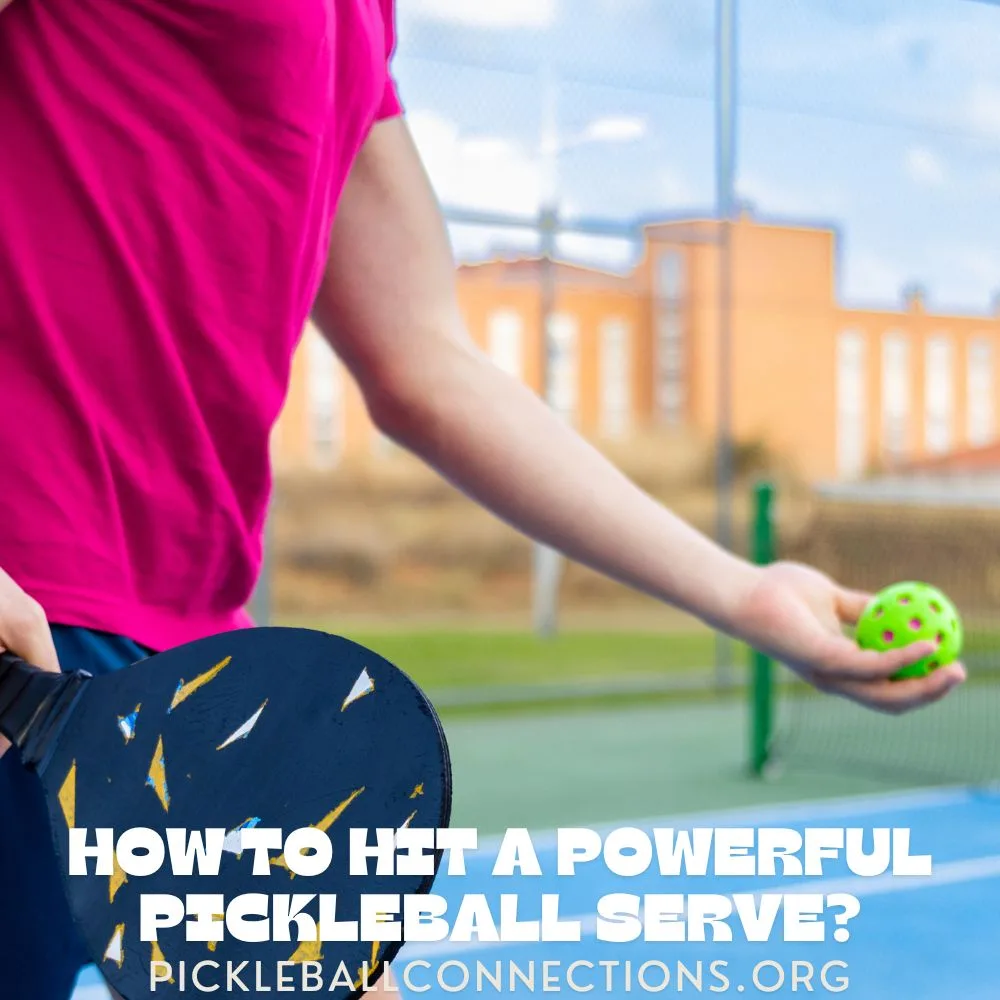
How to Hit a Powerful Pickleball Serve: A Comprehensive Guide
A powerful serve in pickleball can be a game-changing weapon, setting the tone for each rally and potentially giving you a strategic advantage from the very first shot. While the sport’s rules require underhand serving, there are still numerous ways to generate significant power while maintaining control and accuracy. This guide will walk you through the essential elements of developing a powerful serve while highlighting important considerations and potential pitfalls.
The Foundation: Proper Mechanics and Setup
Before focusing on power, mastering the fundamental mechanics is crucial. The official rules require that:
- The ball must be struck below waist level (approximately belly button height)
- The paddle head must remain below your wrist throughout the serving motion
- At least one foot must stay behind the baseline without touching the court
- The serve must be made with an underhand motion
The recommended setup includes:
- An eastern (handshake) grip for optimal control and versatility
- A closed stance with feet parallel to the baseline
- Slight knee bend to enable proper weight transfer
- Relaxed shoulders and arms to promote fluid motion
Power Generation: A Full-Body Approach
The key to generating serve power lies in utilizing your entire body rather than relying solely on arm strength. This involves:
- Ground-Up Power Chain:
- Start with weight loaded on your back foot
- Engage legs through controlled knee bend
- Transfer weight forward during the serving motion
- Rotate hips and core in sequence
- Upper Body Mechanics:
- Turn shoulders in sync with hip rotation
- Create a coiled position for energy storage
- Maintain loose arms for maximum racquet head speed
- Follow through completely across your body
Critical Contact Point and Follow-Through
The moment of impact is crucial for converting generated power into effective ball speed:
- Contact the ball slightly in front of your body
- Maintain forward momentum through contact
- Follow through naturally toward your opposite shoulder
- Allow your body to move forward into the court
Advanced Techniques and Common Mistakes
Advanced Power Techniques:
- “Hit through the ball” rather than just making contact
- Add controlled topspin for additional pace and challenging bounce
- Vary serve speeds while maintaining consistent motion
- Target deep corners, particularly opponent’s backhand
Common Mistakes to Avoid:
- Technical Errors:
- Locked knees preventing proper weight transfer
- Over-reliance on arm strength
- Poor timing in the power chain
- Incomplete follow-through
- Strategic Mistakes:
- Using maximum power on every serve
- Predictable serving patterns
- Sacrificing placement for power
- Rushing the serving motion
Important Considerations and Downsides
Physical Impact:
- Injury Risks:
- Repetitive strain on shoulder and arm muscles
- Potential back strain from improper mechanics
- Increased risk of tennis elbow with poor technique
- Energy Conservation:
- Powerful serves require more energy
- May affect endurance in longer matches
- Could impact overall game strategy
Strategic Drawbacks:
- Consistency Challenges:
- Higher power often means lower accuracy
- Increased risk of serving faults
- More difficult to maintain in pressure situations
- Tactical Limitations:
- Opponents may adapt to pace
- Can become predictable if overused
- May sacrifice strategic placement for power
Development and Practice
Progressive Approach:
- Start with proper form at moderate speeds
- Gradually increase power while maintaining control
- Use target practice to combine power with accuracy
- Incorporate video analysis for technique refinement
Conditioning Requirements:
- Core strengthening exercises
- Leg power development
- Shoulder mobility work
- Proper warm-up routine
Match Implementation
The key to effectively using a powerful serve in matches lies in strategic application:
- Vary serve power and placement
- Read opponent positioning and tendencies
- Adjust strategy based on game situation
- Consider energy management in longer matches
Equipment Considerations
Your equipment choices can significantly impact serve power:
- Select a paddle that balances power with control
- Consider grip size for optimal control
- Ensure proper footwear for stability
- Account for weather conditions
Conclusion
While a powerful serve can be a valuable asset in pickleball, it’s essential to develop it thoughtfully and use it strategically. Focus on proper mechanics first, then gradually build power while maintaining control and accuracy. Remember that the most effective servers aren’t necessarily those who hit with maximum power on every serve, but rather those who can combine power with placement, variation, and tactical awareness.
The goal should be to develop a serve that can be both powerful and reliable, while understanding when to use different levels of power based on the game situation. This balanced approach will lead to more consistent success than simply trying to overpower opponents on every serve.ot, you’ll be well on your way to becoming a more well-rounded and formidable player on the court.formidable player on the court.
#1 Pickball Paddles Set of 2 | #1 Pickball Paddles Set of 4 | #1 Pickball Single Paddle |
| 3000+ Reviews Free Shipping at Amazon.com | 200+ Reviews Free Shipping at Amazon.com | 800+ Reviews Free Shipping at Amazon.com |
Summary and FAQs
What are the essential rules for a legal pickleball serve?
Based on the article and official pickleball rules, I’ll present the essential rules for a legal pickleball serve in a clear, structured format:
Core Serving Requirements:
Serve Motion
- Must use an underhand serving motion
- Cannot use sidearm or overhand serves
- Motion must be in an upward arc
Height and Position Requirements
- Ball must be struck below waist level
- Waist level is defined as approximately belly button height
- Paddle head must stay below the wrist during the entire serving motion
Foot Positioning
- At least one foot must remain behind the baseline
- Neither foot can touch the court surface during serve
- Server can’t step into the court until after contact
- Contact Rules
- Server must make contact with the ball in the air
- Ball cannot be bounced before serving
- Contact must be clean and clear
Server Position
- Must serve from the correct side of the centerline
- Right side for even scores
- Left side for odd scores
Additional Important Points:
- Only one serve attempt is allowed (no second serves like in tennis)
- The serve must travel diagonally across the court
- The ball must clear the non-volley zone (kitchen)
- Server must wait for the score to be called before serving
NOTE: These rules aim to maintain fair play and prevent players from gaining an unfair advantage through overly aggressive serving techniques. Following these requirements while still developing power is key to an effective serve.
Remember: A legal serve is the foundation of the game – no matter how powerful your serve might be, it won’t count if it doesn’t meet these basic requirements.
How can I generate more power in my pickleball serve without breaking the rules?
I’ll explain how to generate more power in your pickleball serve while staying within the rules, organized in a different structure than the original article:
- Body Position & Setup
- Starting Stance:
- Adopt a closed stance, parallel to baseline
- Keep feet shoulder-width apart
- Maintain slight knee bend
- Position ball at comfortable height
- Grip & Hand Position:
- Use eastern (handshake) grip
- Keep wrist firm but not tense
- Hold the ball at waist height
- Power Generation Sequence
A. Lower Body Drive:- Start with weight on back foot
- Push through legs
- Transfer weight forward
- Use ground force reaction
- Rotate hips smoothly
- Engage core muscles
- Create torque through midsection
- Maintain athletic posture
- Keep shoulders relaxed
- Allow natural shoulder rotation
- Maintain loose arms
- Create pendulum motion
- Contact Point Optimization
- Ideal Contact Zone:
- Strike ball slightly in front of body
- Hit at highest legal point
- Maintain forward momentum
- Focus on clean contact
- Follow-through:
- Continue motion after contact
- Swing through the ball
- Allow natural body rotation
- Move forward into court
- Advanced Power Techniques
- Ball Spin:
- Add controlled topspin
- Create challenging bounce
- Maintain consistent contact
- Vary spin rates
- Momentum Control:
- Use controlled acceleration
- Build up swing speed
- Time all components
- Maintain smooth motion
- Key Power Principles
- Energy Transfer:
- Use kinetic chain properly
- Build power from ground up
- Coordinate all movements
- Maintain fluid motion
- Control Elements:
- Balance power with accuracy
- Keep consistent contact point
- Maintain legal form
- Focus on smooth execution
- Practice Tips for Power Development
- Progressive Training:
- Start with proper form
- Gradually increase speed
- Add power incrementally
- Video record technique
- Power Drills:
- Practice weight transfer
- Work on timing
- Focus on follow-through
- Use target practice
Remember:
- Power comes from coordinated movement, not arm strength
- Maintain legal form while increasing power
- Focus on consistency before maximum power
- Practice regularly to develop muscle memory
This structured approach helps develop power while maintaining control and staying within the rules. The key is to integrate all elements smoothly rather than forcing power through arm strength alone.
What are the most common mistakes people make when trying to hit powerful serves?
LeHere’s a comprehensive breakdown of common mistakes people make when attempting powerful pickleball serves, organized differently from the original article:
- Technical Form Mistakes
A. Lower Body Errors
- Stance Problems:
- Standing too stiff
- Locked knees preventing weight transfer
- Poor foot positioning
- Incorrect weight distribution
- Movement Issues:
- Not using leg drive
- Static positioning
- Failing to transfer weight forward
- Poor balance during serve
B. Upper Body Mistakes
- Arm-Related:
- Over-relying on arm strength
- Tense muscles during swing
- Rigid wrist movement
- Improper grip pressure
- Shoulder Problems:
- Restricted shoulder rotation
- Lifting shoulders too high
- Inconsistent swing path
- Poor follow-through
- Timing & Coordination Errors
A. Sequence Issues
- Power Chain Problems:
- Wrong order of body movements
- Disconnected body segments
- Poor timing between components
- Rush through motion
- Rhythm Mistakes:
- Inconsistent tempo
- Jerky movements
- Rushed service motion
- Poor ball toss timing
- Strategic Mistakes
A. Power Management
- Control Issues:
- Using maximum power every serve
- Sacrificing accuracy for power
- Inconsistent contact point
- Poor speed control
- Tactical Errors:
- Predictable serving patterns
- Lack of variation
- Poor placement choices
- Ignoring opponent positioning
- Mental Mistakes
A. Focus Problems
- Concentration Issues:
- Overthinking the serve
- Lack of routine
- Poor preparation
- Inconsistent focus
- Pressure Handling:
- Tensing under pressure
- Rushing in crucial moments
- Loss of technique in games
- Emotional serving
- Physical Preparation Errors
A. Conditioning Mistakes
- Preparation Issues:
- Inadequate warm-up
- Poor flexibility
- Weak core strength
- Limited endurance
- Recovery Problems:
- Overtraining serve motion
- Ignoring fatigue
- Poor body maintenance
- Inadequate rest
- Equipment-Related Mistakes
A. Gear Issues
- Equipment Problems:
- Wrong paddle weight
- Improper grip size
- Poor footwear choice
- Inadequate court positioning
Impact of These Mistakes:
- Immediate Effects:
- Reduced serve effectiveness
- Increased fault rate
- Inconsistent results
- Energy waste
- Long-term Consequences:
- Risk of injury
- Developed bad habits
- Stunted improvement
- Decreased confidence
Prevention Tips:
- Regular Practice:
- Focus on proper form
- Video analysis
- Gradual power increase
- Consistent routine
- Professional Input:
- Seek coaching
- Get technique feedback
- Regular form checks
- Ongoing learning
Remember:
- Identify and correct mistakes early
- Build proper foundation before adding power
- Focus on consistency over pure power
- Maintain proper form under pressure
Understanding and avoiding these common mistakes will help develop a more effective and reliable powerful serve while reducing the risk of injury and technical problems.
Is it better to always serve with maximum power?
Let me break down why serving with maximum power isn’t always the optimal strategy, structured differently from the original article:
- Strategic Implications
A. Advantages of Varied Power
- Tactical Benefits:
- Keeps opponents off-balance
- Creates unpredictability
- Opens up court positioning
- Allows better placement control
- Game Management:
- Conserves energy
- Maintains consistency
- Reduces error rate
- Improves overall control
B. Disadvantages of Constant Maximum Power
- Performance Issues:
- Higher error rate
- Reduced accuracy
- Inconsistent placement
- Limited strategic options
- Physical Impact:
- Faster fatigue
- Increased injury risk
- Reduced endurance
- Greater strain on body
- Situational Considerations
A. When to Use Maximum Power
- Specific Scenarios:
- Opening points of games
- After timeouts
- Against slow-reacting opponents
- When momentum shift needed
- Strategic Moments:
- Key points
- When opponent is out of position
- After establishing rhythm
- To change game pace
B. When to Reduce Power
- Tactical Situations:
- Close games
- When precision needed
- Against aggressive returners
- During windy conditions
- Physical Conditions:
- Later in matches
- Multiple games played
- Hot weather
- When feeling fatigue
- Power Management Strategy
A. Effective Power Distribution
- Service Patterns:
- Mix power levels
- Vary placement
- Combine spin with power
- Use tactical sequences
- Energy Conservation:
- Plan power usage
- Monitor fatigue
- Maintain reserves
- Adjust to match length
- Better Alternatives
A. Balanced Approach
- Serve Variations:
- Different speeds
- Various spin types
- Changed trajectories
- Varied placement
- Control Elements:
- Consistent technique
- Precise targeting
- Reliable execution
- Strategic placement
- Implementation Tips
A. Developing Varied Serve
- Practice Methods:
- Power control drills
- Placement exercises
- Spin development
- Situation simulation
- Match Application:
- Read opponent reactions
- Adapt to conditions
- Monitor effectiveness
- Adjust as needed
- Key Success Factors
A. Balance Elements
- Critical Components:
- Power control
- Placement accuracy
- Strategic awareness
- Energy management
- Performance Metrics:
- Consistency rate
- Point conversion
- Error reduction
- Overall effectiveness
Conclusion:
Instead of always serving with maximum power:
- Develop a varied serve repertoire
- Use power strategically
- Focus on placement and consistency
- Adapt to match situations
- Maintain energy efficiency
Remember:
- The best servers are versatile
- Power is just one element of serving
- Strategy beats pure power
- Consistency wins matches
This balanced approach will lead to better overall results than constantly trying to serve with maximum power.
What kind of physical preparation is needed for developing a powerful serve?
I’ll break down the physical preparation needed for developing a powerful pickleball serve, organized in a different structure than the original article:
Core Strength Development
A. Essential Core Exercises
- Primary Movements:
- Planks (all variations)
- Russian twists
- Medicine ball rotations
- Standing core rotations
- Stabilization Work:
- Side planks
- Bird dogs
- Dead bugs
- Anti-rotation holds
Lower Body Preparation
A. Leg Strength Training
- Key Exercises:
- Squats
- Lunges
- Step-ups
- Calf raises
- Power Development:
- Jump squats
- Box jumps
- Lateral bounds
- Speed skaters
Upper Body Conditioning
A. Shoulder Strength
- Essential Movements:
- Band pull-aparts
- External rotations
- Face pulls
- Wall slides
- Mobility Work:
- Shoulder circles
- Arm swings
- Cross-body stretches
- Shoulder dislocates
Flexibility Training
A. Dynamic Stretching
- Pre-serve Routine:
- Arm circles
- Trunk rotations
- Hip openers
- Leg swings
- Maintenance Stretches:
- Shoulder mobility
- Hip flexibility
- Back stretches
- Wrist mobility
Endurance Building
A. Cardiovascular Fitness
- General Conditioning:
- Interval training
- Circuit workouts
- Agility drills
- Footwork exercises
- Sport-Specific Endurance:
- Serve practice sets
- Movement drills
- Multi-game simulations
- Recovery work
- Injury Prevention
A. Preventative Exercises
- Stabilization Work:
- Rotator cuff exercises
- Wrist strengthening
- Lower back stability
- Balance training
- Recovery Methods:
- Proper cool-down
- Light stretching
- Foam rolling
- Active recovery
Warm-up Protocol
A. Pre-Practice Routine
- Sequential Warm-up:
- Light cardio (5-10 minutes)
- Dynamic stretching
- Movement preparation
- Practice serves progression
- Activation Exercises:
- Band work
- Light plyometrics
- Mobility drills
- Core activation
Training Schedule
A. Weekly Structure
- Workout Distribution:
- 2-3 strength sessions
- Daily mobility work
- Regular cardio
- Adequate rest days
- Progressive Loading:
- Start light
- Increase gradually
- Monitor fatigue
- Adjust as needed
Recovery Practices
A. Essential Recovery
- Recovery Methods:
- Proper sleep
- Hydration
- Nutrition
- Active rest
- Maintenance Work:
- Light stretching
- Mobility exercises
- Self-massage
- Ice/heat therapy
Important Considerations:
Individual Needs:
- Assess current fitness level
- Identify weaknesses
- Set realistic goals
- Progress appropriately
Long-term Development:
- Build foundation first
- Progress gradually
- Maintain consistency
- Monitor progress
Balance Requirements:
- Don’t overtrain
- Include rest periods
- Listen to your body
- Adjust program as needed
Remember:
- Physical preparation is ongoing
- Focus on whole-body fitness
- Maintain consistent routine
- Prevention is key
This comprehensive physical preparation approach will help develop and maintain a powerful serve while reducing injury risk and improving overall performance.


