Mastering the Dink Shot in Pickleball | Best Pickleballs
The dink shot is a fundamental technique in pickleball that involves hitting a soft, controlled shot that lands in the opponent’s non-volley zone near the net. This strategic shot relies on finesse rather than power and serves multiple purposes: controlling rally pace, forcing opponent errors, and creating offensive opportunities. Mastering the dink requires proper stance, grip, and swing mechanics, along with strategic ball placement and position maintenance near the non-volley zone line.
While dinking is crucial, players should avoid overreliance on this technique and maintain a balanced approach that incorporates both defensive and aggressive shots. Advanced players can enhance their dinking game by incorporating deception, mastering transitions, and developing mental composure during extended dink rallies.
#1 Pickball Paddles Set of 2 | #1 Pickball Paddles Set of 4 | #1 Pickball Single Paddle |
 3000+ Reviews Free Shipping at Amazon.com |  200+ Reviews Free Shipping at Amazon.com |  800+ Reviews Free Shipping at Amazon.com |
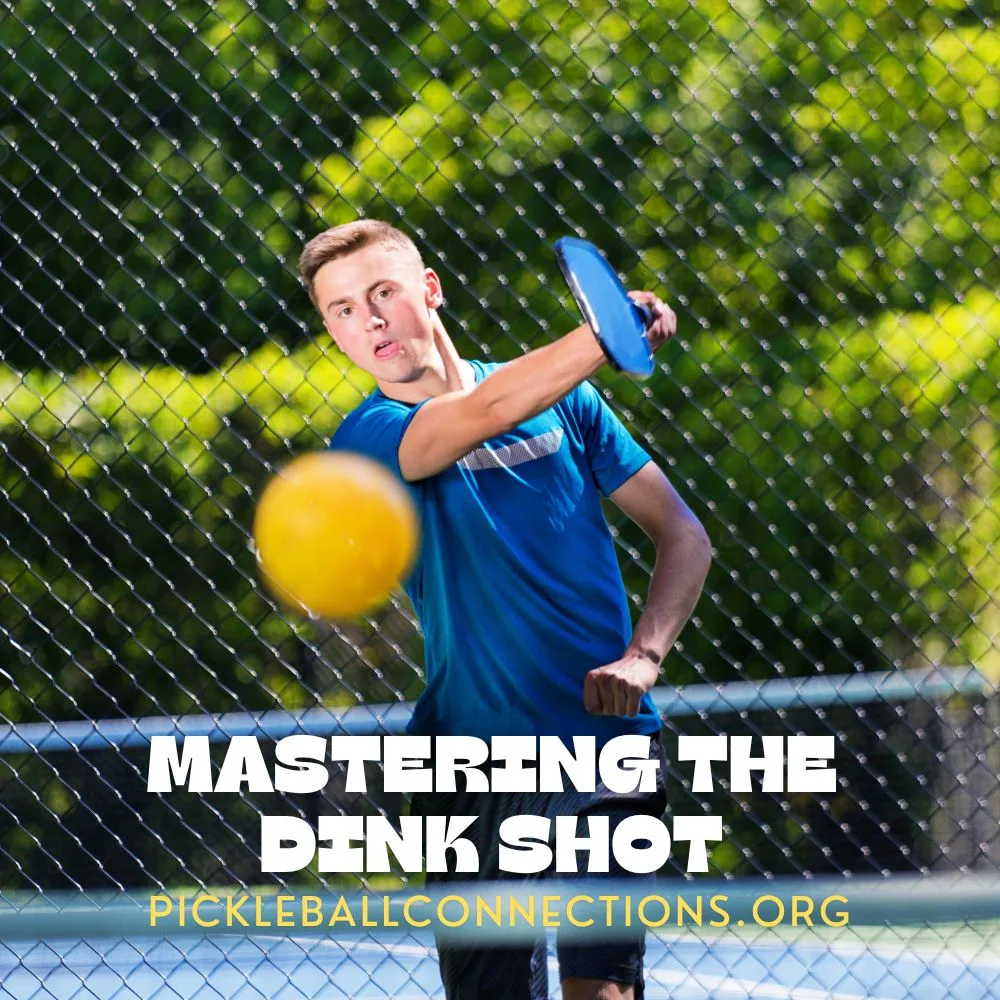
Mastering the Dink Shot: The Key to Controlling the Pickleball Court
In the fast-paced and dynamic sport of pickleball, one shot stands out as a true game-changer: the dink. This soft, controlled shot is a fundamental technique that every serious player must master to take their game to the next level. By understanding the nuances of the dink shot and incorporating it seamlessly into your strategic arsenal, you can gain a significant advantage on the court.
Defining the Pickleball Dink Shot
The dink shot in pickleball is a purposefully soft and arcing shot, hit after the ball bounces, that lands within the opponent’s non-volley zone (NVZ) near the net. This area, commonly referred to as “the kitchen,” spans 7 feet on either side of the net and extends from sideline to sideline. The dink is designed to challenge your opponents, forcing them to make precision shots in a confined space.
Unlike a power shot, the dink relies on control and finesse rather than sheer force. When executed properly, it creates a low-trajectory ball that hovers over the net, making it difficult for opponents to attack. Dinks can be hit straight across the court or diagonally (cross-court), adding an element of unpredictability to your game.
The Benefits of Mastering the Dink
Developing a consistent and effective dink shot is crucial for several reasons:
- Control the Pace of the Rally: Dinks allow you to slow down the tempo of the game, giving you time to set up your next move. This is particularly beneficial when facing powerful opponents who thrive on fast-paced exchanges.
- Force Opponent Errors: Dinks put significant pressure on your opponents, as they must make precise shots to avoid faulting in the NVZ. Errors are common, as even the slightest misstep can result in a fault.
- Set Up Offensive Opportunities: A well-placed dink can create openings for you to transition into more aggressive shot types, such as volleys or overhead smashes. By controlling the rally, you can dictate the flow of the game.
- Neutralize Opponent Strengths: If your opponents excel at power shots, dinks can be an effective counter, forcing them to adjust their strategy and play a more controlled game.
Mastering the Fundamentals of Dinking
Executing a successful dink shot requires a combination of proper technique, body positioning, and court awareness. Here are the key elements to focus on:
Stance and Grip
Adopt a balanced, low stance with your knees slightly bent and your weight evenly distributed. Hold the paddle with a relaxed, open grip, allowing for a gentle, controlled swing.
Swing Mechanics
Instead of a large backswing, use a short, compact motion, focusing on a smooth, upward swing. Make contact with the ball in front of your body, using a lifting motion to send it softly over the net.
Ball Placement
Aim to land your dinks as close to the NVZ line as possible, challenging your opponents to make difficult returns. Targeting the corners or the middle of the kitchen can create openings in their defense.
Dink Variation
Mix up the height, speed, and direction of your dinks to keep your opponents guessing. Incorporating cross-court dinks, high-arcing dinks, and even dinks with subtle spin can make them harder to handle.
Maintaining Position
When dinking, it’s crucial to stay close to the NVZ line, resisting the temptation to retreat. This allows you to maintain control of the rally and quickly transition to other shot types as needed.
Potential Downsides of Overreliance on Dinking
While the dink shot is a powerful and versatile weapon in your pickleball arsenal, it’s important to be aware of the potential downsides of overemphasizing this technique:
- Predictability: If you become too reliant on dinks, your game may become overly predictable, making it easier for opponents to anticipate your patterns and adjust their strategies accordingly.
- Lack of Aggression: An over-focus on dinking can sometimes lead to a more passive playing style, where you may miss opportunities to capitalize on openings and take the initiative in a rally.
- Vulnerability to Power Shots: Highly skilled opponents may be able to exploit a dink-heavy game plan by hitting powerful shots that overwhelm your defensive dinking approach.
To address these potential issues, it’s crucial to maintain a balanced and adaptable game plan. While dinking is a crucial skill, it should be just one part of a multifaceted strategy that also incorporates more aggressive shot-making and the ability to change pace and rhythm as needed.
Developing Advanced Dinking Techniques
As you progress in your pickleball journey, exploring more advanced dinking techniques can elevate your game to new heights. Some key areas to focus on include:
Dink Feints and Deception
Incorporating subtle body movements, racket head positioning, and ball spin into your dinks can make them harder to read and anticipate. This can create openings for you to capitalize on.
Transitioning from Dinks to Other Shots
Smoothly transitioning from a dink to a volley, drive, or overhead shot can catch your opponents off guard and allow you to seize control of the rally.
Dinking in Varied Game Situations
Mastering the art of dinking in different scenarios, such as when returning serves, on the third shot, or when caught off guard, will make you a more well-rounded and adaptable player.
The Mental Game of Dinking
Effective dinking requires not just technical proficiency but also a strong mental approach. Factors such as decision-making, confidence, and composure can significantly impact your success with this critical shot.
Recognizing Dinking Opportunities
Developing the ability to quickly identify when a dink shot is the most appropriate response can give you a significant advantage. This awareness comes from experience and a deep understanding of the game’s dynamics.
Building Dinking Confidence
Overcoming the fear of dinking and developing a positive, proactive mindset can help you execute this shot more consistently under pressure. Visualization, self-talk, and targeted practice can all contribute to building this confidence.
Maintaining Composure
Dink rallies can often be extended and mentally taxing. Staying focused, regulating your emotions, and making sound decisions during these exchanges are crucial for coming out on top.
Integrating Dinks into Your Overall Strategy
While the dink shot is a fundamental and invaluable skill, it should not be used in isolation. Integrating dinks seamlessly into your overall game plan is key to maximizing their effectiveness.
Utilize dinks to control the pace and rhythm of the rally, but be prepared to transition to more aggressive shots when the opportunity arises. Recognize when to employ dinks for defensive or offensive purposes, and learn to read your opponents’ tendencies to anticipate their responses.
Consistent practice with dinking drills, repetition, and game-like scenarios will help you develop the touch, feel, and decision-making skills required to become a true master of this shot.
Conclusion
Embrace the Dink and Elevate Your Pickleball Game In the fast-paced and dynamic world of pickleball, the dink shot stands out as a true game-changer. By mastering the fundamentals, exploring advanced techniques, and integrating dinks into your overall strategic approach, you can gain a significant competitive edge.
Embrace the dink, understand its nuances, and make it a cornerstone of your pickleball arsenal. With consistent practice and a deep understanding of this critical shot, you’ll be well on your way to becoming a more well-rounded and formidable player on the court.formidable player on the court.
#1 Pickball Paddles Set of 2 | #1 Pickball Paddles Set of 4 | #1 Pickball Single Paddle |
| 3000+ Reviews Free Shipping at Amazon.com | 200+ Reviews Free Shipping at Amazon.com | 800+ Reviews Free Shipping at Amazon.com |
Summary and FAQs
What exactly is a dink shot in pickleball and why is it important?
Let me break down what a dink shot is and its importance in pickleball in a clear, structured way:
What is a Dink Shot?
A dink shot is:
- A soft, controlled shot with an arcing trajectory
- Hit after the ball bounces
- Designed to land in the opponent’s non-volley zone (NVZ or “kitchen”)
- Typically hovers low over the net
- Can be hit straight or diagonally across the court
Why It’s Important:
Strategic Control
- Slows down the pace of the game
- Allows better positioning and setup for next moves
- Helps counter aggressive players who prefer fast exchanges
Defensive Advantages
- Forces opponents to make precise shots in a confined space
- Neutralizes power players by making them play a more controlled game
- Reduces the effectiveness of aggressive shots
Offensive Benefits
- Creates openings for more aggressive shots
- Allows you to dictate the flow of the game
- Sets up opportunities for volleys and overhead smashes
Game Management
- Essential for maintaining court position
- Helps conserve energy during long rallies
- Provides time to read opponent patterns and adjust strategy
Skill Development
- Improves overall ball control and touch
- Enhances court awareness and positioning
- Develops better decision-making abilities
The dink shot is essentially a foundational skill that bridges defensive and offensive play, making it a crucial technique for players looking to improve their overall game and maintain control during rallies.
What are the key elements of proper dinking technique and stance?
Let me break down the key elements of proper dinking technique and stance in a comprehensive yet organized way:
Proper Stance Foundation
- Knees slightly bent for flexibility and quick movement
- Low, athletic position for better balance
- Weight evenly distributed on both feet
- Feet shoulder-width apart
- Stay close to the non-volley zone line
- Ready position with paddle up and in front
Grip Technique
- Relaxed, open grip (avoid tight grip)
- Continental or eastern grip recommended
- Firm but not tense hold on the paddle
- Allows for quick adjustments and control
- Wrist should remain stable but not rigid
Swing Mechanics
Key Components:
- Short, compact backswing
- Smooth, controlled forward motion
- Upward lifting movement
- Contact point in front of body
- Follow-through towards target
- Controlled paddle face angle
Body Positioning
- Stay squared to the net
- Core engaged for stability
- Shoulders level and relaxed
- Head steady and eyes on the ball
- Maintain good spacing from the ball
Movement and Footwork
- Small, quick adjustment steps
- Stay balanced during the shot
- Move forward rather than backing up
- Position yourself behind the ball
- Ready to reset after each shot
Ball Contact
- Hit the ball at its highest point after bounce
- Contact point slightly in front of body
- Gentle lifting motion rather than hitting
- Control ball speed through paddle speed
- Focus on accuracy over power
Remember: The key to successful dinking is consistency and control rather than power. Practice these elements individually before combining them into one fluid motion. Regular practice of these fundamentals will help develop muscle memory and improve your overall dinking effectiveness.
How can I avoid becoming too predictable when using dink shots?
Let me provide a comprehensive guide on how to maintain unpredictability in your dink shots:
Shot Variation Techniques
- Alternate shot placement:
- Cross-court dinks
- Straight-ahead dinks
- Middle dinks
- Corner dinks
- Vary ball height and depth
- Mix spin types:
- Topspin dinks
- Backspin dinks
- No-spin dinks
Timing Elements
- Change up your rhythm
- Use different ball speeds:
- Fast, shallow dinks
- Slow, floating dinks
- Vary the timing between shots
- Mix quick and delayed responses
Strategic Patterns
- Avoid repeating the same sequence
- Create fake patterns then break them
- Alternate between:
- Aggressive dinks
- Defensive dinks
- Setup dinks
Court Positioning
- Move along the non-volley zone line
- Adjust your stance subtly
- Switch between:
- Centered position
- Offset position
- Forward-leaning stance
- Neutral stance
Shot Transitions
- Mix dinks with:
- Drive shots
- Volleys
- Lobs
- Speed-up shots
- Use dinks to set up different plays
Advanced Deception
- Incorporate body language fakes
- Use paddle position deception
- Look one way, hit another
- Disguise your intentions
- Change shot selection last moment
Reading and Adapting
- Study opponent reactions
- Notice their positioning patterns
- Identify their weaknesses
- Adjust your strategy accordingly
- Keep them guessing
Remember: The key is not just using these variations randomly, but implementing them strategically based on your opponent’s tendencies and the game situation. Practice these variations regularly to make them natural parts of your game.
What are the most common mistakes players make when attempting dink shots?
Here’s a comprehensive breakdown of the most common mistakes players make when attempting dink shots:
Technical Errors
- Grip Issues:
- Holding the paddle too tightly
- Incorrect grip position
- Inconsistent grip pressure
- Swing Problems:
- Using too big a backswing
- Hitting instead of lifting
- Poor contact point
- Incorrect paddle angle
Positional Mistakes
- Standing too far from the NVZ line
- Backing up after each shot
- Poor ready position:
- Standing too upright
- Knees not bent
- Weight on heels
- Improper distance from the ball
Mental Errors
- Lack of patience
- Rushing shots
- Over-analyzing
- Loss of focus during long dink rallies
- Trying too hard to win the point
- Fear of making mistakes
Strategic Mistakes
- Being too predictable
- Not reading opponents
- Wrong shot selection:
- Dinking when should attack
- Dinking to opponent’s strong side
- Failing to recognize scoring opportunities
- Not varying shot placement
Power Control Issues
- Hitting too hard
- Not hitting hard enough
- Inconsistent power application
- Poor touch sensitivity
- Overcompensating on returns
Common Result Errors
- Hitting into the net
- Dinking too high
- Landing shots beyond the NVZ
- Not clearing the net
- Inconsistent depth
Body Movement Issues
- Not staying balanced
- Poor footwork
- Stiff arm movements
- Rigid body position
- Not maintaining proper stance
Practice-Related Mistakes
- Not practicing enough
- Practicing without purpose
- Ignoring fundamentals
- Not incorporating drills
- Failing to work on weaknesses
Tips to Address These Mistakes:
- Focus on fundamentals first
- Practice with purpose
- Record and analyze your play
- Get feedback from experienced players
- Develop muscle memory through repetition
- Stay patient during practice
- Work on one aspect at a time
- Maintain proper technique even when tired
Remember: Recognizing these common mistakes is the first step to improving your dink shot. Focus on correcting one issue at a time rather than trying to fix everything at once.
How do I effectively transition from dinking to more aggressive shots?
Let me provide a detailed breakdown of how to effectively transition from dinking to aggressive shots:
Reading Transition Opportunities
Key Indicators:
- High dink from opponent
- Weak or off-balance return
- Opponent out of position
- Ball above net height
- Short or shallow returns
- Opponent’s backpedaling
Body Positioning for Transitions
Preparation:
- Stay balanced and ready
- Maintain athletic stance
- Keep paddle up
- Position behind the ball
- Stay close to NVZ line
Quick Adjustments:
- Shift weight forward
- Rotate shoulders
- Step into the shot
- Widen stance if needed
Shot Selection Based on Situation
Attacking Options:
- Speed-up shots
- Drive volleys
- Overhead smashes
- Angular put-aways
- Power shots
- Cross-court winners
When to Use Each:
- Speed-up: On medium-height dinks
- Volleys: When ball is waist-high
- Overheads: On high returns
- Put-aways: When opponents are back
Technical Elements
Grip Transition:
- Maintain consistent grip
- Avoid last-minute changes
- Stay relaxed but ready
- Quick grip adjustments if needed
Swing Adjustment:
- Compact to full swing
- Increase swing speed
- Follow through completely
- Maintain control
Mental Aspects
Decision Making:
- Quick recognition
- Confident execution
- Commitment to the shot
- Risk assessment
- Situational awareness
Strategic Considerations
Game Situations:
- Score awareness
- Momentum shifts
- Partner position
- Court position
- Wind conditions
Pattern Development:
- Set up patterns
- Create predictable responses
- Break patterns unexpectedly
- Use fakes and deception
Practice Drills
Transition Exercises:
- Dink-to-drive drills
- Mixed rally practice
- Speed-up drills
- Pattern practice
- Partner exercises
Progressive Practice:
- Start slow
- Increase speed gradually
- Add complexity
- Simulate game situations
Common Transition Scenarios
Specific Situations:
- Third shot transitions
- Middle game transitions
- Defensive to offensive
- Counter-attacking
- End of rally opportunities
Remember: Successful transitions require:
- Quick recognition
- Proper preparation
- Confident execution
- Good timing
- Regular practice
- Strategic awareness
The key is to make these transitions smooth and natural through consistent practice while maintaining control and accuracy in your shots.