Pickleball Footwork Drills | Best Pickleballs
Pickleball footwork is the critical foundation of successful play, transforming ordinary players into strategic athletes. This comprehensive guide explores the nuanced world of court movement, detailing essential techniques from the fundamental ready position to advanced strategic positioning. By integrating targeted drills, physical conditioning, and mental preparation, players can dramatically improve their game.
The article breaks down core movements like the split step and lateral shuffling, offers practical training exercises, and addresses both physical and psychological aspects of footwork. From beginner-level basics to advanced competitive strategies, the guide provides a holistic approach to understanding and mastering pickleball movement. Technology, equipment considerations, and emerging training trends are also examined, offering players a complete roadmap to elevating their court performance through intentional, precise footwork.
#1 Pickball Paddles Set of 2 | #1 Pickball Paddles Set of 4 | #1 Pickball Single Paddle |
 3000+ Reviews Free Shipping at Amazon.com |  200+ Reviews Free Shipping at Amazon.com |  800+ Reviews Free Shipping at Amazon.com |
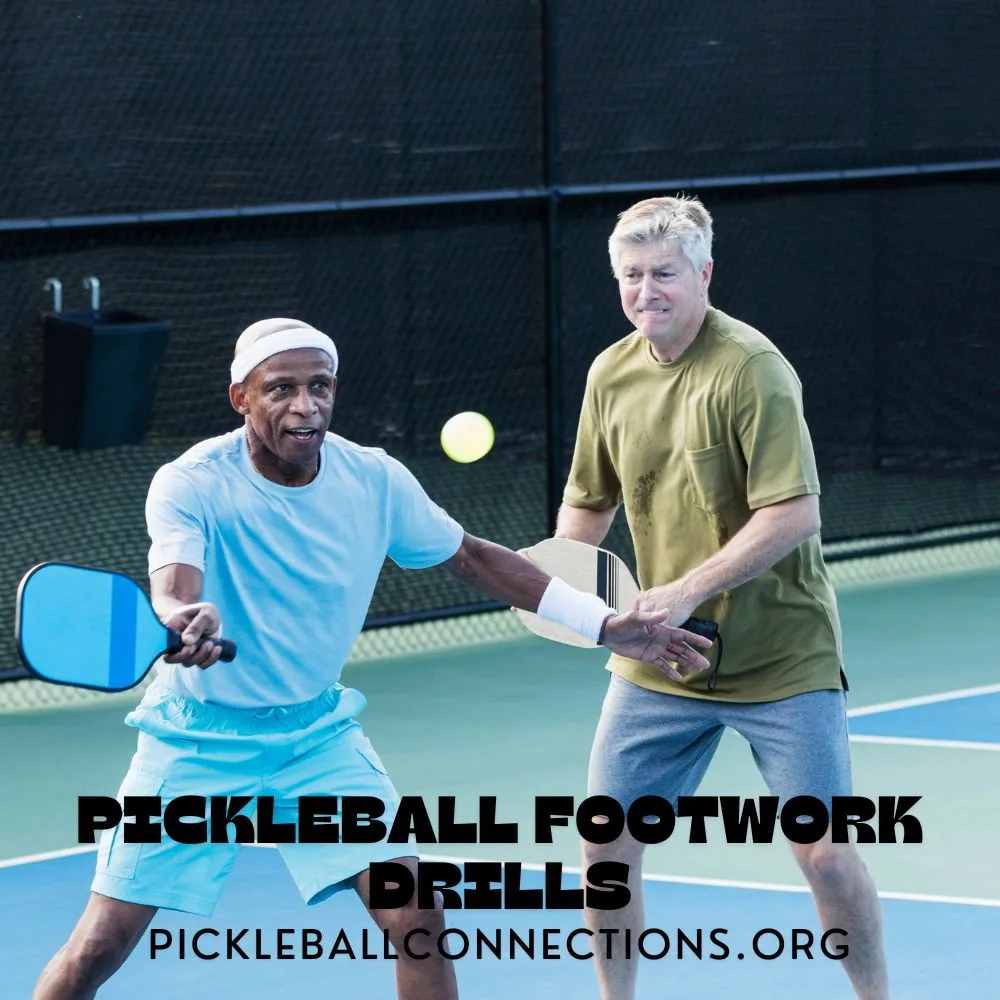
Pickleball Footwork Drills: Mastering Movement on the Court
In the fast-paced world of pickleball, your feet are your most critical piece of equipment. While paddles and technique matter, it’s your ability to move efficiently and strategically that truly separates average players from exceptional ones. This comprehensive guide delves into the art and science of pickleball footwork, offering drills, insights, and techniques to elevate your game.
The Importance of Footwork in Pickleball
Footwork is the foundation of success in pickleball. It’s more than just moving around the court – it’s about positioning, balance, and creating opportunities. Proper footwork allows players to:
- Reach difficult shots with ease
- Maintain optimal court positioning
- Reduce energy expenditure
- Minimize injury risk
- Create strategic advantages during play
Core Footwork Techniques to Master
- Ready Position The ready position is your launching pad for effective movement. Key elements include:
- Feet shoulder-width apart
- Knees slightly bent
- Weight on the balls of your feet
- Paddle held in a neutral, prepared position
- Upper body relaxed but alert
- Split Step Technique The split step is a game-changing movement that prepares you for rapid directional changes:
- Perform a small hop as your opponent strikes the ball
- Lands with feet ready to move in any direction
- Creates a moment of suspension for quick reaction
- Helps neutralize opponent’s shot potential
- Shuffling and Lateral Movement Unlike tennis or other racket sports, pickleball requires precise lateral movements:
- Avoid crossing feet when moving side to side
- Keep body facing the net
- Maintain low center of gravity
- Take small, quick steps instead of large strides
Essential Footwork Drills
- Cone Drill Setup:
- Place 4-5 cones in a zigzag pattern
- Start at one end of the court
- Shuffle quickly between cones
- Focus on quick, precise movements
- Maintain balanced, low stance
Progression:
- Increase speed as technique improves
- Add paddle work to simulate game conditions
- Incorporate direction changes
- Ladder Drill Equipment needed:
- Agility ladder (or tape on ground)
- Pickleball paddle (optional)
Variations:
- Single-foot hops
- In-and-out steps
- Lateral movements
- Forward and backward progressions
- Shadowing Drill A mental and physical training technique:
- Simulate playing points without a ball
- Focus exclusively on footwork
- Practice movement patterns
- Visualize opponent’s potential shots
Physical Conditioning for Improved Footwork
Supplementary Exercises:
- Jump Rope
- Improves foot speed
- Builds cardiovascular endurance
- Enhances coordination
- Plyometric Training
- Box jumps
- Burpees
- Lateral bounds
- Builds explosive movement capability
- Yoga and Flexibility
- Improves balance
- Increases core strength
- Enhances overall body awareness
Technology and Analysis
Modern training now incorporates:
- Video analysis platforms
- Wearable movement tracking devices
- AI-powered technique assessment
- Digital coaching resources
Equipment Considerations
Footwear is crucial:
- Choose shoes with:
- Lateral support
- Good cushioning
- Lightweight design
- Non-marking soles
- Replace shoes every 6-12 months
- Consider sport-specific pickleball shoes
Potential Downsides and Limitations
- Physical Constraints
- Age-related mobility limitations
- Previous injuries
- Physical fitness level
- Learning Challenges
- Complex techniques require significant practice
- Mental barriers to movement
- Potential frustration during learning
- Time Investment
- Mastering footwork takes consistent practice
- Requires dedicated training time
- May slow initial game progression
- Equipment Costs
- Quality training gear can be expensive
- Technology-assisted training has upfront costs
- Injury Risks
- Improper techniques can lead to:
- Ankle sprains
- Knee stress
- Lower back strain
Advanced Competitive Strategies
- Psychological Preparation
- Develop court awareness
- Read opponent’s movement patterns
- Maintain mental composure
- Energy Conservation
- Minimize unnecessary movements
- Anticipate shot trajectories
- Use efficient movement techniques
Training Progression
Beginner Level:
- Focus on basic stance
- Practice split step
- Develop lateral movement
- Build cardiovascular endurance
Intermediate Level:
- Incorporate complex drills
- Improve reaction time
- Add paddle work to footwork exercises
- Develop strategic positioning
Advanced Level:
- Master multi-directional movements
- Develop anticipatory skills
- Integrate psychological strategies
- Continuous technique refinement
Emerging Trends
- Virtual reality training
- AI-powered movement analysis
- Biomechanical research integration
- Personalized digital coaching platforms
Conclusion
Pickleball footwork is a dynamic, evolving skill that requires dedication, practice, and a holistic approach. By understanding the principles, practicing targeted drills, and maintaining a growth mindset, players can transform their court movement from a limitation to a significant advantage.
Remember, every step counts in pickleball. Your feet are not just moving you around the court – they’re creating opportunities, defending your space, and ultimately determining your success in this exciting sport.
#1 Pickball Paddles Set of 2 | #1 Pickball Paddles Set of 4 | #1 Pickball Single Paddle |
| 3000+ Reviews Free Shipping at Amazon.com | 200+ Reviews Free Shipping at Amazon.com | 800+ Reviews Free Shipping at Amazon.com |
Summary and FAQs
How often should I practice footwork drills to see improvement in my pickleball game?
Based on the comprehensive analysis of pickleball footwork training, here’s a detailed recommendation:
Optimal Footwork Drill Practice Schedule:
Frequency:
- 2-3 times per week
- 20-30 minutes per session
Beginner Level:
- Start with 2 sessions per week
- Focus on fundamental techniques
- 15-20 minute initial sessions
- Gradually increase intensity and duration
Intermediate to Advanced Players:
- 3-4 sessions per week
- 30-45 minute comprehensive training
- Mix of technical drills and conditioning exercises
Practice Breakdown:
- Warm-up (5-10 minutes)
- Dynamic stretching
- Light cardiovascular activity
- Mobility exercises
- Core Footwork Drills (15-20 minutes)
- Cone drills
- Ladder exercises
- Split step practice
- Lateral movement techniques
- Conditioning (10-15 minutes)
- Plyometric exercises
- Agility training
- Sport-specific movements
Progression Indicators:
- Improved court coverage
- Faster reaction times
- Better balance
- Reduced fatigue during play
Key Recommendations:
- Consistency is more important than intensity
- Listen to your body
- Incorporate rest and recovery
- Gradually increase complexity of drills
Expected Improvement Timeline:
Ongoing: Continuous skill refinement
4-6 weeks: Noticeable technique improvements
8-12 weeks: Significant movement efficiency
Can older players or beginners effectively improve their pickleball footwork?
Pickleball Footwork for Older Players and Beginners: A Comprehensive Approach
Physical Capabilities and Adaptability:
- Age is not a barrier to improving footwork
- Individual fitness and mobility vary
- Personalized, progressive training is key
Modification Strategies:
Physical Assessment
- Consult healthcare professional
- Evaluate current fitness level
- Identify potential limitations
- Create personalized training plan
Low-Impact Drill Modifications
- Reduced movement range
- Slower progression
- Emphasis on technique over speed
- Chair or stationary drills for limited mobility
Specific Technique Adaptations
Beginners & Older Players:
- Shorter drill duration
- More rest intervals
- Focus on form over intensity
- Use support tools if needed
Strength and Mobility Foundations
- Gentle strength training
- Balance exercises
- Flexibility work
- Core stability development
Mental Approach
- Patience with learning process
- Celebrate small improvements
- Develop positive mindset
- Reduce performance pressure
Recommended Initial Exercises:
- Seated split step practice
- Wall balance exercises
- Slow lateral movements
- Lightweight paddle handling
- Controlled shuffling
Safety Considerations:
- Start very slowly
- Use assistive devices if needed
- Stop if experiencing pain
- Prioritize proper form
- Gradual progression
Potential Benefits:
- Improved overall fitness
- Enhanced balance
- Increased confidence
- Social engagement
- Cognitive stimulation
- Fun physical activity
Recommended Weekly Training:
- 2-3 sessions
- 15-20 minutes per session
- Mix of technique and conditioning
Psychological Support:
- Join supportive community
- Consider group lessons
- Use positive reinforcement
- Learn from peers
- Maintain realistic expectations
Technological Assistance:
- Video analysis
- Adaptive training apps
- Virtual coaching platforms
- Modification suggestions
Conclusive Insight:
Age and beginner status are not limitations but opportunities for structured, personalized pickleball footwork development. With proper guidance, modified techniques, and consistent practice, players of all ages and skill levels can significantly improve their court movement and overall game performance.
What are the most important footwork skills for beginner pickleball players?
Essential Footwork Skills for Beginner Pickleball Players
Foundational Skills:
Ready Position
- Feet shoulder-width apart
- Knees slightly bent
- Weight on balls of feet
- Body relaxed but alert
- Paddle held neutrally
- Balanced stance enabling quick movement
Split Step Technique
Purpose:
- Prepares for rapid directional changes
- Creates reactive movement capability
- Neutralizes opponent’s shot potential
Execution:
- Small hop as opponent hits ball
- Land with feet ready to move
- Maintain low center of gravity
- Develop timing and coordination
Lateral Shuffling
Key Characteristics:
- Move side-to-side without crossing feet
- Keep body facing net
- Take small, quick steps
- Maintain low stance
- Preserve balance and control
Basic Court Positioning
Strategic Elements:
- Stay near court center
- Minimize movement distance
- Anticipate ball trajectory
- Maintain optimal defensive/offensive position
- Coordinate with partner in doubles
Weight Transfer and Balance
Critical Techniques:
- Smooth weight shifting
- Controlled directional changes
- Maintain stability during movement
- Use body mechanics efficiently
- Reduce energy expenditure
Recommended Practice Approach:
- Start with slow, controlled movements
- Focus on technique over speed
- Gradually increase complexity
- Use visual and verbal cues
- Practice consistently
- Seek immediate feedback
Progression Path:
- Master individual skills
- Combine techniques
- Increase movement speed
- Develop intuitive court awareness
- Build muscle memory
Training Priorities:
- Technique precision
- Consistency
- Body awareness
- Gradual skill integration
- Confidence building
Common Beginner Mistakes to Avoid:
- Crossing feet during movement
- Staying flat-footed
- Overcomplicated movements
- Losing balance
- Neglecting paddle positioning
Mental Approach:
- Stay patient
- Embrace learning process
- Celebrate small improvements
- Maintain positive attitude
- Focus on enjoyment
Recommended Initial Drills:
- Stationary split step practice
- Slow lateral shuffling
- Balance exercises
- Paddle handling with movement
- Mirror drills with partner
Equipment Recommendations:
- Comfortable court shoes
- Non-restrictive clothing
- Lightweight paddle
- Optional training markers/cones
Long-Term Development:
- Continuous skill refinement
- Adapt techniques
- Increase movement complexity
- Develop strategic thinking
- Enjoy the learning journey
By mastering these foundational footwork skills, beginner pickleball players can build a solid foundation for future growth, improved performance, and enhanced court enjoyment.
Do I need special equipment to practice footwork drills?
You don’t need much specialized equipment to practice footwork drills. Here’s what you’ll need:
For basic drills:
- Cones (or any markers) for the zigzag drill
- An agility ladder (or you can use tape on the ground to create one)
- Your pickleball paddle (optional for some drills)
The article emphasizes that many drills can be done with minimal equipment. For example, the shadowing drill requires no equipment at all – you simply practice movement patterns while visualizing opponent’s shots.
The most important equipment-related consideration is actually your footwear. You should invest in proper shoes that have:
- Good lateral support
- Adequate cushioning
- A lightweight design
- Non-marking soles
The article does mention some optional advanced training equipment like video analysis platforms and wearable movement tracking devices, but these are not necessary for basic footwork practice. Most fundamental drills can be performed with simple, affordable equipment or no equipment at all.
How do footwork drills differ between singles and doubles pickleball?
I can explain the key differences in footwork drills between singles and doubles play:
Singles footwork drills emphasize:
- Full-court coverage movements, since you’re responsible for the entire court
- Quick recovery to center court position
- Endurance-focused drills since you’ll be moving more
- Diagonal movement patterns to cover deep shots and drop shots
- Front-to-back court coverage drills
Doubles footwork drills focus on:
- Side-to-side movements within your half of the court
- Partner coordination and switching positions
- Quick transitions from baseline to kitchen line
- Reaction drills for volleying at the non-volley zone
- More compact movements in smaller spaces
The main difference is that singles requires more court coverage and endurance, while doubles demands more precise positioning and teamwork-oriented footwork. In singles, you’ll practice covering the whole court quickly, while doubles drills often focus on mastering your designated court position and coordinating with your partner.
The drills themselves might be similar, but you’d adjust the court coverage area and movement patterns to match the game format you’re training for.