
Graphite vs Composite Pickleball Paddles | Best Pickleballs
The debate between graphite and composite pickleball paddles continues to be a crucial consideration for players. Graphite paddles are known for their lightweight, responsive nature, offering excellent control and precision. They’re typically more durable but come at a higher price point. Composite paddles, on the other hand, provide a balance of power and control, with textured surfaces that enhance spin generation.
They’re often more affordable and forgiving, making them popular among beginners. The choice between the two depends on factors such as playing style, skill level, and personal preference. Graphite excels in control and maneuverability, while composite offers more power and spin potential. Other considerations include weight, sweet spot size, and noise levels. As pickleball technology advances, hybrid designs are emerging, combining elements of both materials. Ultimately, the best paddle is one that feels comfortable and enhances the player’s performance and enjoyment of the game.
#1 Pickball Paddles Set of 2 | #1 Pickball Paddles Set of 4 | #1 Pickball Single Paddle |
 3000+ Reviews Free Shipping at Amazon.com |  200+ Reviews Free Shipping at Amazon.com |  800+ Reviews Free Shipping at Amazon.com |
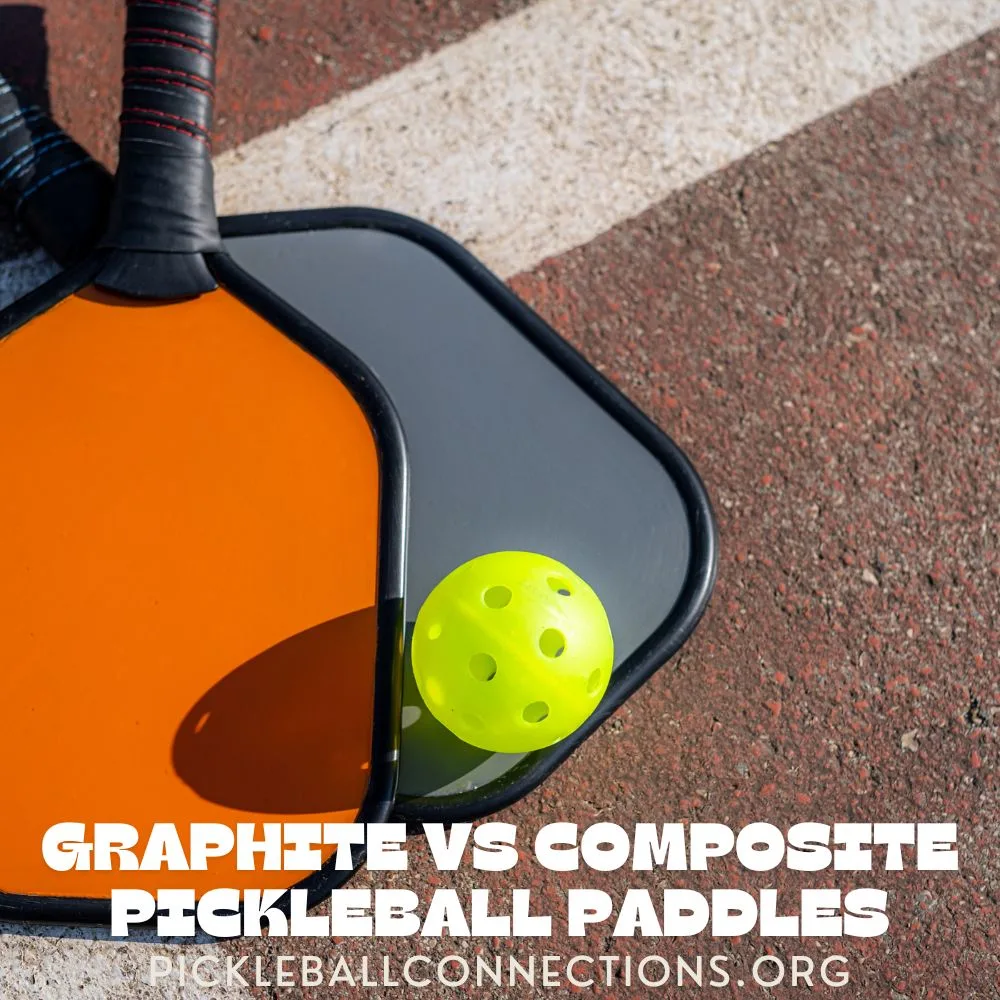
Graphite vs Composite Pickleball Paddles: A Comprehensive Guide
Pickleball, the fast-growing sport that combines elements of tennis, badminton, and table tennis, has seen a surge in popularity in recent years. As the game evolves, so does the equipment, with paddle technology at the forefront of innovation. Players face a crucial decision when selecting their paddle: graphite or composite? This comprehensive guide will explore the differences, benefits, and potential drawbacks of each material to help you make an informed choice.
Understanding Paddle Construction
Before delving into the graphite vs composite debate, it’s essential to understand the basic components of a pickleball paddle. Every paddle consists of three main parts: the face material, the core, and the grip. The face material, which is our primary focus, is typically either graphite or composite. The core, often made of polymer, aluminum, or Nomex, influences the paddle’s weight and feel. The grip connects the player to the paddle and impacts comfort and control.
Graphite Pickleball Paddles
Graphite paddles have long been a favorite among competitive players due to their lightweight and responsive nature. Made from carbon-based material, graphite faces are typically only a few millimeters thick and provide excellent energy transfer. They offer a stiff surface that spreads the ball’s impact evenly, resulting in consistent shots.
Pros:
- Lightweight: Enhances maneuverability and reduces fatigue during long play sessions.
- Excellent control: Provides precise shot placement and better feel for the ball.
- Responsive: Offers quick reaction times, ideal for fast-paced play.
- Durability: Generally more resistant to wear and tear than composite paddles.
Cons:
- Less power: May require more effort to generate power in shots.
- Higher price point: Often more expensive than composite options.
- Less spin: The smooth surface can make it challenging to generate spin.
Composite Pickleball Paddles
Composite paddles, often made with fiberglass or a blend of materials, offer a balance between power and control. They typically have a slightly textured surface that can enhance spin. Composite paddles are known for their versatility and are popular among players of all skill levels.
Pros:
- Versatility: Offers a good balance of power and control.
- Spin generation: Textured surface allows for easier spin application.
- Power: Generally provides more power than graphite paddles.
- Affordability: Often less expensive than graphite options.
Cons:
- Weight: Can be slightly heavier than graphite paddles.
- Durability: May not last as long as graphite paddles, though this gap is narrowing.
- Less precise control: The softer face may not offer the same level of precision as graphite.
Performance Comparison
When comparing graphite and composite paddles, several factors come into play:
- Weight and Maneuverability: Graphite paddles are typically lighter, offering quicker maneuverability. However, this can sometimes result in less power. Composite paddles, being slightly heavier, can provide more power but may be less maneuverable.
- Power vs Control: Composite paddles often provide more power due to their slightly heavier weight and softer face material. Graphite paddles excel in control and precision but may require more skill to generate power.
- Spin Generation: The textured surface of composite paddles often makes it easier to generate spin. Graphite paddles, with their smoother surface, may require more technique to produce the same level of spin.
- Sweet Spot and Forgiveness: Some composite paddles offer larger sweet spots, making them more forgiving on off-center hits. Graphite paddles typically have a smaller sweet spot but provide more consistent performance across the paddle face.
- Feel and Feedback: Graphite paddles generally provide a crisper response and more immediate feedback, while composite paddles offer a softer feel that some players find more comfortable.
Player Considerations
The choice between graphite and composite often depends on the player’s skill level, playing style, and physical attributes:
- Skill Level: Beginners might prefer the forgiveness of composite paddles, while advanced players may opt for the precision of graphite.
- Playing Style: Power players might lean towards heavier composite paddles, while those focusing on control might prefer lighter graphite options.
- Physical Factors: Players with arm or joint issues may find composite paddles more comfortable due to their softer feel and vibration-dampening properties.
Price Comparison
Paddle prices continue to vary widely based on materials and brand. Composite paddles generally range from $50 to $150, offering good value for beginners and intermediate players. Graphite paddles typically cost between $100 and $200, with high-end models exceeding this range.
Environmental and Noise Considerations
Environmental awareness is growing in the pickleball community. Composite paddles, often containing plastic-based materials, may have a larger environmental footprint. Graphite and carbon fiber production can be energy-intensive. Some manufacturers are exploring more sustainable options, including recycled materials or bio-based composites.
Noise is another consideration, especially in residential areas. Graphite paddles tend to be quieter than composite ones, while aluminum core paddles are often the loudest. Polymer core paddles are generally the quietest.
Conclusion
The choice between graphite and composite paddles ultimately depends on your individual needs, preferences, and playing style. Graphite paddles excel in control and precision, making them ideal for advanced players who prioritize shot placement and quick reactions. Composite paddles offer versatility and often more power, suiting a wide range of players from beginners to competitive athletes.
Consider factors like weight, core material, and price when making your decision. It’s also worth noting that paddle technology continues to evolve, with hybrid designs and new materials emerging. Some paddles now combine graphite and composite elements to offer the best of both worlds.
Ultimately, the best paddle is one that feels comfortable in your hand and enhances your enjoyment of the game. If possible, test different paddles before making a purchase. As pickleball continues to grow in popularity, we can expect even more innovations in paddle technology, offering players increasingly sophisticated options to optimize their performance on the court.
#1 Pickball Paddles Set of 2 | #1 Pickball Paddles Set of 4 | #1 Pickball Single Paddle |
| 3000+ Reviews Free Shipping at Amazon.com | 200+ Reviews Free Shipping at Amazon.com | 800+ Reviews Free Shipping at Amazon.com |
Summary and FAQs
Which is better for beginners, graphite or composite pickleball paddles?
Composite paddles are generally better for beginners. Let me explain why in a clear, structured way:
Composite Paddles for Beginners – Advantages:
- More forgiving – They typically have a larger sweet spot, making off-center hits less punishing
- Better power generation – The slightly heavier weight helps beginners get more power without perfect technique
- Easier spin control – The textured surface makes it easier to generate spin
- More affordable – Lower price point makes them a better entry-level investment ($50-$150 range)
- Softer feel – Provides more comfortable feedback for new players
Graphite Paddles – Why they’re less ideal for beginners:
- Smaller sweet spot – Requires more precise contact
- Lighter weight – While maneuverable, makes power generation more technique-dependent
- Higher price point ($100-$200+)
- More precise control – While beneficial for advanced players, can be challenging for beginners to utilize effectively
- Smoother surface – Makes spin generation more technically demanding
Are graphite paddles more durable than composite paddles?
Yes, graphite paddles are generally more durable than composite paddles. Here’s a clear breakdown:
Graphite Paddles:
- Listed explicitly as having better durability in the “Pros” section
- More resistant to general wear and tear
- Stiffer material that maintains its properties longer
Composite Paddles:
- Listed under “Cons” as potentially having shorter lifespan
- However, the article notes that “this gap is narrowing” – suggesting that newer composite paddles are becoming more durable
- Made with fiberglass or material blends which traditionally haven’t lasted as long as graphite
Important Context:
Even though graphite paddles are more durable, both types can be suitable investments depending on your playing style and needs
This durability advantage is one factor that partially justifies graphite paddles’ higher price point
Do graphite paddles provide more power or control compared to composite paddles?
Graphite paddles provide more control while composite paddles provide more power. Here’s the detailed breakdown:
Graphite Paddles:
Control Advantages:
- Excellent control and precise shot placement
- Better “feel” for the ball
- More responsive with quick reaction times
- Provides crisper response and immediate feedback
- More consistent performance across the paddle face
Power Limitations:
- Listed explicitly as requiring more effort to generate power
- Lighter weight can mean less natural power in shots
- Players need more skill to generate power with these paddles
Composite Paddles:
Power Advantages:
- Generally provides more power than graphite paddles
- Slightly heavier weight contributes to power generation
- Softer face material helps with power transfer
- Larger sweet spot can help maintain power on off-center hits
Control Limitations:
- Less precise control compared to graphite
- Softer face doesn’t offer the same level of precision
- May be less maneuverable due to higher weight
Which type of paddle is quieter, graphite or composite?
Graphite paddles tend to be quieter than composite paddles. Here’s what the article specifically states about noise levels, from quietest to loudest:
Graphite Paddles:
- Explicitly mentioned as being quieter than composite paddles
- This can be an important consideration for playing in residential areas
Composite Paddles:
- Generally louder than graphite paddles
- No specific decibel levels are mentioned in the article
Additional Context About Noise:
- Core material also affects noise levels:
- Polymer core paddles are generally the quietest
- Aluminum core paddles are often the loudest
- The article mentions noise as an important consideration, especially in residential areas where noise restrictions might be in place
So if noise level is a priority (perhaps due to playing location or community restrictions), a graphite paddle would be the better choice between the two materials.
Are graphite paddles more expensive than composite paddles?
Graphite paddles are more expensive than composite paddles. Here’s the specific price breakdown:
Graphite Paddles:
- Price Range: $100 – $200+
- Listed as having a “higher price point” in the Cons section
- High-end models can exceed the $200 range
Composite Paddles:
- Price Range: $50 – $150
- Listed as more “affordable” in the Pros section
- Noted as offering good value for beginners and intermediate players
Price Comparison Context:
- The price difference seems to be justified by:
- Greater durability of graphite paddles
- Precision and control benefits
- Higher-quality materials
- The article suggests that despite the higher cost, both types can be worthwhile investments depending on:
- Player skill level
- Playing style
- Individual needs and preferences
- Budget constraints
While graphite paddles are more expensive, the choice should be based on more than just price, considering factors like playing style, skill level, and intended use.


