
How to Choose the Right Pickleball Paddle | Best Pickleballs
Choosing the right pickleball paddle is crucial for optimizing your game. The article guides players through key factors to consider, including paddle components, materials, shapes, and dimensions. It explains how core materials (like polymer and carbon fiber) and face materials (such as fiberglass, carbon fiber, and graphite) affect performance. The guide discusses paddle shapes, handle considerations, and the impact of weight and balance on play.
It emphasizes the importance of matching the paddle to your playing style and skill level, covering power vs. control, sweet spot size, and spin generation. The article also touches on brand considerations, budget factors, and the benefits of testing paddles before purchase. It addresses potential downsides, like cost and adjustment periods, and concludes by reminding readers that the best paddle is ultimately the one that feels right and complements their game.
#1 Pickball Paddles Set of 2 | #1 Pickball Paddles Set of 4 | #1 Pickball Single Paddle |
 3000+ Reviews Free Shipping at Amazon.com |  200+ Reviews Free Shipping at Amazon.com |  800+ Reviews Free Shipping at Amazon.com |
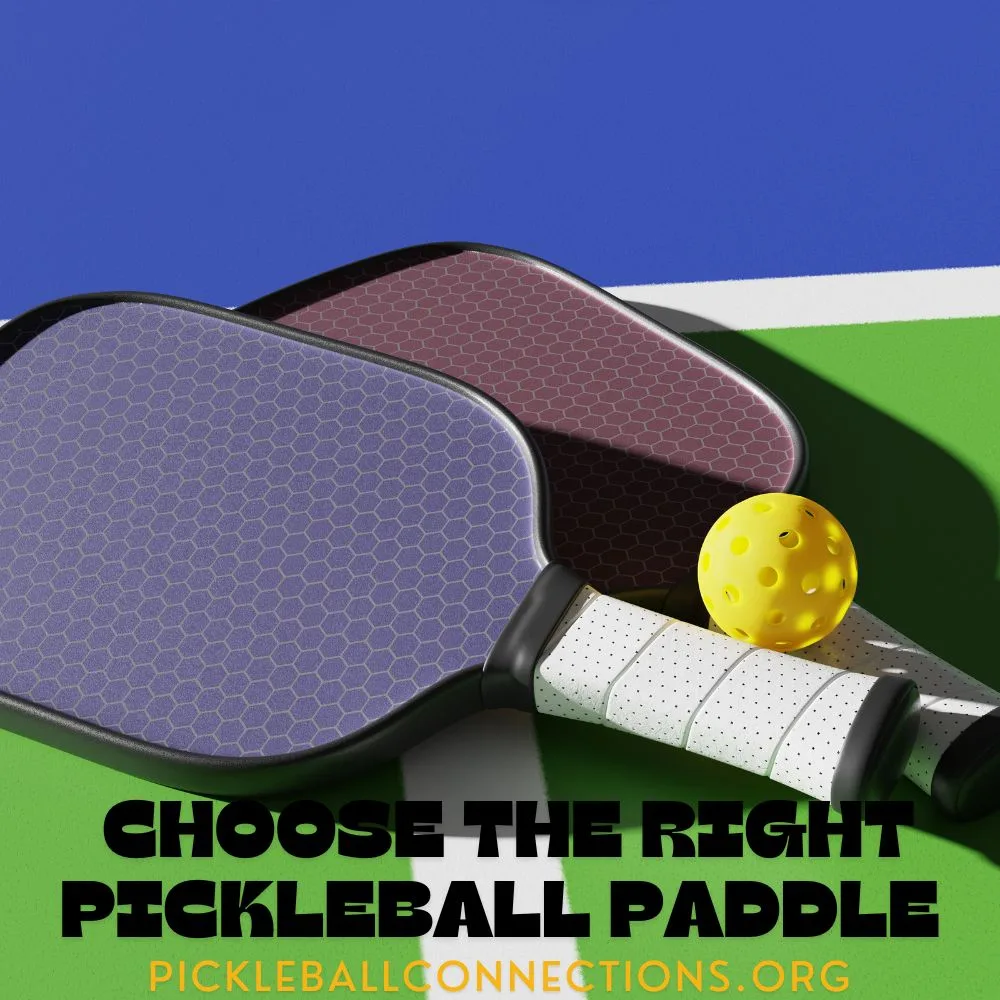
How to Choose the Right Pickleball Paddle: A Comprehensive Guide
Pickleball has exploded in popularity, attracting players of all ages and skill levels. As you dive into this exciting sport, one of the most crucial decisions you’ll make is selecting the right paddle. With hundreds of options available, this choice can seem overwhelming. This guide will walk you through the key factors to consider when choosing a pickleball paddle, helping you make an informed decision that enhances your game.
Understanding Paddle Components and Materials
The core and face of a pickleball paddle are the primary components that influence its performance. Let’s break these down:
Core Materials:
Polymer cores are the most common, found in about 95% of paddles. They offer a good balance of power and control while being durable and relatively quiet. The quality of the polymer can vary significantly, affecting the paddle’s consistency and longevity.
Some high-end paddles use carbon fiber cores, which can offer unique playing characteristics. Aluminum cores exist but are less common and generally not recommended due to their tendency to dent and wear quickly.
Core Thickness:
Core thickness plays a crucial role in paddle performance:
- Thicker cores (around 16 mm) offer more control and stability, making them ideal for beginners and many advanced players.
- Thinner cores (10-14 mm) provide more power but less control and stability.
Face Materials:
The paddle’s face or surface material affects power, control, and spin generation:
- Fiberglass (composite) faces offer the most power but a smaller sweet spot.
- Carbon fiber faces provide better feel and a larger sweet spot but slightly less power than fiberglass.
- Graphite faces are similar to carbon fiber but often more cost-effective.
- Some paddles use hybrid materials, combining characteristics of different materials.
Grit and Spin:
The paddle’s surface texture affects spin generation. Some paddles have a painted-on grit that may wear off quickly, while others feature built-in texture (like raw carbon fiber) for longer-lasting spin potential.
Paddle Shapes and Dimensions
Pickleball paddles come in various shapes, each offering different advantages:
- Elongated Shapes: Typically 16.5 inches long and 7.5 inches wide, these offer more reach, power, and spin but have a smaller sweet spot and less maneuverability.
- Widebody Shapes: Usually about 15.5 inches long and 8.5 inches wide, these provide the largest sweet spot and high maneuverability but sacrifice reach and power.
- Classic Shapes: Approximately 16 inches long and 8 inches wide, offering a balanced mix of power, spin, forgiveness, and maneuverability.
Handle Considerations
Handle length can vary from 4.5 to 6 inches. Longer handles can provide more power and spin but reduce the paddle face area. Consider your grip style:
- Two-handed players may prefer handles of at least 5.25 inches.
- Single-handed players often find a 5-inch handle sufficient.
- Those who like to place a finger on the paddle face may prefer shorter handles.
Weight and Balance
Paddle weight typically ranges from 7 to 8.5 ounces:
- Lightweight (7-7.6 oz): Offers better maneuverability but requires more effort for power.
- Midweight (7.6-8.2 oz): Provides a balance of power and control.
- Heavyweight (>8.2 oz): Offers more power with less effort but may be less maneuverable.
The balance point of the paddle also affects its feel and performance. Some players prefer head-heavy paddles for more power, while others prefer balanced or handle-heavy paddles for more control.
Assessing Your Playing Style and Skill Level
Your playing style and skill level should significantly influence your paddle choice:
- Beginners often benefit from midweight paddles with larger sweet spots for forgiveness.
- Aggressive players might prefer lighter, elongated paddles for quick reactions and powerful shots.
- Defensive players may opt for heavier paddles with more control.
- Consider whether you play primarily indoors or outdoors, as this can affect your paddle choice due to differences in ball behavior.
Key Performance Factors
When choosing a paddle, consider these performance factors:
- Power vs. Control: Determine whether you prioritize powerful shots or precise ball placement.
- Sweet Spot Size: A larger sweet spot offers more forgiveness for off-center hits.
- Maneuverability: Important for quick reactions at the net.
- Spin Generation: If spin is a crucial part of your game, look for paddles with textured surfaces.
Paddle Classifications
Paddles are often classified into three categories:
- Control Paddles: Emphasize precision and touch.
- All-Court Paddles: Offer a balance of power and control.
- Power Paddles: Designed for players who like to hit hard and generate pace.
Brand Considerations and Budget
While there are many brands available, stick to reputable manufacturers that produce USAPA-approved paddles. Consider customer reviews and warranty options. Paddles can range from $50 to over $200. While higher-priced paddles often offer better performance and durability, there are excellent options at various price points.
Testing and Customization
If possible, demo different paddles before making a purchase. Many retailers and clubs offer demo programs. You can also borrow paddles from fellow players to get a feel for different options. Some online retailers offer fitting quizzes to help narrow down your choices.
After selecting a paddle, you can customize it with different grips or even add lead tape to adjust the weight and balance.
Regulations and Adapting to Your New Paddle
Ensure your chosen paddle meets USAPA specifications, especially if you plan to play in tournaments. Once you have your new paddle, expect a break-in period as you adjust to its characteristics. Your play style may evolve as you become more comfortable with the paddle.
Downsides and Considerations
While finding the right paddle can significantly improve your game, it’s important to note some potential downsides:
- Cost: High-end paddles can be expensive, and the benefits may not be noticeable for beginners.
- Overemphasis on Equipment: A great paddle won’t make up for lack of skill or practice.
- Adjustment Period: Changing paddles may temporarily affect your performance as you adapt.
- Durability Concerns: Some high-performance materials may be less durable than simpler designs.
- Overwhelming Options: The vast array of choices can lead to decision paralysis or second-guessing your selection.
Conclusion
Choosing the right pickleball paddle is a personal journey that depends on your playing style, physical attributes, and preferences. By understanding the key components and how they affect performance, you can make an informed decision. Remember, the “perfect” paddle is the one that feels right to you and complements your game. Don’t be afraid to experiment with different options, and most importantly, enjoy the process of finding your ideal pickleball partner!
#1 Pickball Paddles Set of 2 | #1 Pickball Paddles Set of 4 | #1 Pickball Single Paddle |
| 3000+ Reviews Free Shipping at Amazon.com | 200+ Reviews Free Shipping at Amazon.com | 800+ Reviews Free Shipping at Amazon.com |
Summary and FAQs
What’s the most important factor to consider when choosing a pickleball paddle?
While there are many factors to consider, the most important factor when choosing a pickleball paddle is how it matches your individual playing style and skill level. This is fundamental because:
- For Beginners:
- Should choose midweight paddles
- Need larger sweet spots for more forgiveness
- Typically benefit from more control-oriented paddles
- For Aggressive Players:
- Better suited to lighter, elongated paddles
- Helps with quick reactions
- Enables more powerful shots
- For Defensive Players:
- May prefer heavier paddles
- Focus on control over power
- Better for precise ball placement
Secondary factors like core material, face material, weight, and price should all be considered in the context of your playing style and skill level. Even an expensive, high-end paddle won’t improve your game if it doesn’t match how you play.
How do I know if I need a power paddle or a control paddle?
Here’s how to determine whether you need a power or control paddle:
You might need a Power Paddle if:
- You like to hit hard and generate pace
- You prefer playing an aggressive style
- You tend to play from the baseline
- You rely more on powerful drives and smashes
- You have good control over your shots naturally
You might need a Control Paddle if:
- You focus on precision and touch shots
- You prefer a defensive playing style
- You spend a lot of time at the kitchen line (net)
- You like to play dinks and soft shots
- You’re still developing your shot control
- You’re a beginner learning the game
Consider an All-Court Paddle if:
- You have a balanced playing style
- You like to mix up power and finesse shots
- You’re not sure of your style yet
- You want versatility in your game
The best way to determine your need would be to:
- Analyze your current playing style
- Consider your skill level
- If possible, demo different types of paddles
- Pay attention to which shots you hit most frequently
- Think about where on the court you spend most of your time
Does paddle price correlate with quality and performance?
While there is some correlation between price and quality/performance, it’s not a straightforward relationship. Here’s a balanced breakdown:
Price Range:
- Paddles typically cost between $50 to $200+
- Higher-priced paddles often offer better performance and durability
- However, there are excellent options at various price points
Important Considerations:
For Beginners:
- Expensive paddles may not provide noticeable benefits
- The performance advantages might be wasted on developing skills
- A mid-range paddle could be more cost-effective
Value Factors:
- Build quality and durability
- Warranty options
- Brand reputation
- USAPA approval
Potential Downsides of Expensive Paddles:
- Some high-performance materials may be less durable than simpler designs
- The cost might not justify the marginal performance improvement
- Benefits may only be noticeable for advanced players
Key Takeaway:
The best paddle is the one that feels right for your game and skill level, regardless of price. It’s often better to focus on finding a paddle that matches your playing style rather than simply buying the most expensive option available.
How often should I replace my pickleball paddle?
Material Durability Issues:
- Some paddle surfaces with painted-on grit wear off quickly
- Aluminum cores tend to dent and wear faster than other materials
- High-performance materials may be less durable than simpler designs
Signs to Watch For (implied by paddle components discussion):
- Core material degradation
- Face material wear
- Surface texture changes
- Performance changes
The article suggests focusing on:
- Choosing reputable manufacturers
- Looking for warranty options
- Considering durability when selecting materials
I’d recommend consulting manufacturer guidelines or a pickleball professional for specific advice about replacement frequency.
Can I customize my paddle after purchasing it?
You can customize your paddle after purchase, though the options mentioned are relatively limited. Here are the specific customization options mentioned:
Grip Modifications:
- You can change the grip to customize feel
- Different grip options are available (though specific types aren’t detailed in the article)
Weight Adjustments:
- Can add lead tape to modify:
- Overall weight
- Balance point
Break-in Period:
- The article mentions there’s a natural adjustment period after getting a new paddle
- Your play style may evolve as you become comfortable with the paddle
However, it’s worth noting that:
- Any modifications should still comply with USAPA specifications, especially for tournament play
- The article suggests testing different paddles before purchase as the primary way to get your preferred specifications, rather than relying on post-purchase customization


