Pickleball Kitchen Rules | Best Pickleballs
Pickleball’s kitchen rules, governing the non-volley zone near the net, are crucial to the sport’s unique gameplay. The kitchen, a 7-foot area on each side of the net, prevents aggressive net play and encourages strategic finesse. Players cannot volley while in or touching the kitchen, including its lines. Common violations include stepping into the kitchen during volleys or allowing momentum to carry players in after a volley. The rules apply in serving, where the ball must clear the kitchen, and have evolved since pickleball’s inception.
Advanced strategies like dinking and the Erne shot utilize the kitchen rules for competitive advantage. While these rules add depth to the game, they can present challenges for beginners and officiating. Despite potential downsides like slowing game pace, the kitchen rules remain integral to pickleball’s appeal, fostering a unique environment that rewards skill and tactical thinking over pure athleticism, making the sport accessible to players of all ages and abilities.
#1 Pickball Paddles Set of 2 | #1 Pickball Paddles Set of 4 | #1 Pickball Single Paddle |
 3000+ Reviews Free Shipping at Amazon.com |  200+ Reviews Free Shipping at Amazon.com |  800+ Reviews Free Shipping at Amazon.com |
Pickleball Kitchen Rules: Mastering the Non-Volley Zone
Pickleball, a sport that has taken the world by storm, combines elements of tennis, badminton, and table tennis. At its core lies a unique feature that sets it apart from other racquet sports: the kitchen, officially known as the non-volley zone. Understanding and mastering the kitchen rules is crucial for players of all levels, from beginners to professionals competing in major tournaments.
What is the Kitchen in Pickleball?
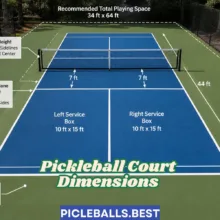
The kitchen is a 7-foot area on each side of the net, extending from sideline to sideline. Its primary purpose is to prevent aggressive net play and create a more strategic, balanced game. The origin of the term “kitchen” is debated, with some attributing it to shuffleboard’s penalty area, while others link it to the phrase “if you can’t stand the heat, get out of the kitchen,” reflecting the intense action in this zone.
Fundamental Kitchen Rules
The fundamental kitchen rule is simple yet nuanced: players cannot volley (hit the ball without letting it bounce) while standing in or touching the non-volley zone. This rule applies continuously until a fault occurs. Importantly, the kitchen line itself is considered part of the kitchen, meaning players cannot touch it during a volley. These rules create a unique dynamic, forcing players to be mindful of their positioning and encouraging strategic play around the kitchen area.
Common Kitchen Violations and Faults
Common kitchen violations include stepping into the zone during a volley, touching the kitchen line while hitting, or allowing momentum to carry a player into the kitchen after a volley. In doubles play, partner violations can occur if one player touches their partner who is in the kitchen during a volley. Even equipment or clothing touching the kitchen during a volley results in a fault. Understanding these nuances is crucial for players to avoid unnecessary penalties.
Serving and the Kitchen
Serving rules also interact with the kitchen. The serve must clear the kitchen and its lines, landing in the diagonal service court. Receiving players often position themselves near the kitchen line to be ready for both deep and short returns. After the serve and return, the kitchen rules come into full effect, influencing positioning and shot selection for both teams.
Advanced Kitchen Strategies
Advanced players use the kitchen strategically, employing techniques like drinking – soft shots that land just over the net in the opponent’s kitchen. This shot forces opponents to let the ball bounce, creating opportunities for offensive play. The kitchen also plays a role in defensive strategies, as players can retreat into it to handle powerful shots, provided they let the ball bounce first.
The Erne Shot: A Kitchen Loophole
One advanced move that interacts interestingly with kitchen rules is the Erne shot. Named after Erne Perry, who popularized it in tournament play, this shot involves a player quickly moving around the kitchen to volley the ball from outside the court boundaries. While challenging to execute, it’s a legal and potentially devastating move when used correctly.
Recent Rule Clarifications
Recent rule clarifications have addressed some previously gray areas. For instance, the 2023 USA Pickleball rulebook explicitly states that momentum carrying a player into the kitchen after a volley, even if the ball is dead, is a fault. This clarification has implications for aggressive net play and requires players to be more cautious about their approach to the kitchen line.
Evolution of Kitchen Rules
The kitchen rules have evolved since pickleball’s inception in the 1960s. Early versions of the game had different non-volley zone dimensions, and the rules surrounding it were less defined. Over time, as the sport has grown and professionalized, the kitchen rules have been refined to enhance fair play and maintain the sport’s unique character.
Challenges and Downsides of Kitchen Rules
While the kitchen rules add depth and strategy to pickleball, they also present some challenges. New players often struggle to remember all the nuances, leading to frequent faults as they learn. Even experienced players can fall afoul of the rules in the heat of competition, potentially costing them crucial points.
Impact on Game Pace
Another downside is that the kitchen rules can sometimes slow down the pace of the game, especially at lower skill levels. Players may become overly cautious around the kitchen line, leading to less dynamic play. However, as players become more skilled, they learn to use the kitchen rules to their advantage, creating fast-paced, strategic rallies.
Officiating Challenges
The kitchen rules also present unique officiating challenges in tournament play. Determining whether a player’s momentum carried them into the kitchen or if they entered it of their own volition after a volley can be difficult to judge in real time. Some professional tournaments have introduced video review systems to address these challenges, but this technology is not available at most recreational levels.
The Unique Appeal of Kitchen Rules
Despite these challenges, the kitchen rules remain a beloved and integral part of pickleball. They create a unique gameplay dynamic that sets pickleball apart from other racquet sports. The rules encourage finesse and strategy over raw power, making the sport accessible to players of all ages and physical abilities.
Tips for Beginners
For beginners learning the game, focusing on a few key points can help master the kitchen rules:
- Always let the ball bounce before hitting it when in the kitchen.
- Be aware of your momentum when approaching the kitchen line for a volley.
- Practice proper footwork to quickly exit the kitchen after retrieving a ball.
- In doubles, communicate clearly with your partner about kitchen positioning.
Advanced Kitchen Tactics
As players advance, they can start incorporating more sophisticated kitchen strategies:
- Use dinks to control the pace of the game and set up offensive opportunities.
- Practice Erne shots to surprise opponents and exploit gaps in their defense.
- Develop a strong kitchen line game, balancing aggressive play with careful footwork.
- Learn to use the kitchen defensively, retreating into it to handle powerful shots when necessary.
Conclusion
In conclusion, the pickleball kitchen rules, while sometimes complex, are fundamental to the sport’s appeal and strategic depth. They create a unique playing environment that rewards skill, finesse, and tactical thinking over pure athleticism. As pickleball continues to grow in popularity, with major tournaments drawing increasing attention and prize money, mastering the kitchen rules remains crucial for players aiming to excel in this exciting sport. Whether you’re a beginner just learning the basics or an experienced player fine-tuning your strategy, understanding and respecting the kitchen rules is key to fully enjoying and succeeding in pickleball.
#1 Pickball Balls | #1 Pickball Bag | #1 Pickball Portable Net |
 19500+ Reviews Free Shipping at Amazon.com |  2600+ Reviews Free Shipping at Amazon.com |  1800+ Reviews Free Shipping at Amazon.com |
Summary and FAQs
Can I ever enter the kitchen during a pickleball game?
I’ll explain when you can enter the kitchen (non-volley zone) in pickleball:
Yes, you can enter the kitchen, but with specific conditions:
- After a Bounce
- You can enter the kitchen any time to hit a ball that has bounced
- You must let the ball bounce first before hitting it while in the kitchen
- During General Play
- You can move through or stand in the kitchen at any time when not hitting the ball
- You can retreat into the kitchen to handle powerful shots (as long as you let them bounce)
- When You Cannot Enter
- During a volley (hitting the ball in the air without a bounce)
- If your momentum would carry you into the kitchen after hitting a volley
- If any part of you or your equipment would touch the kitchen line while volleying
Think of it this way: The kitchen is not a “no-entry zone” – it’s a “no-volley zone.” You’re free to go in and out of it as much as you want, as long as you’re not hitting the ball in the air while in there or immediately before entering it.
What happens if my momentum carries me into the kitchen after hitting a volley?
f your momentum carries you into the kitchen after hitting a volley, it’s a fault – meaning you lose the point/rally. This is a strict rule that was specifically clarified in the 2023 USA Pickleball rulebook.
Here’s what counts as a momentum-related fault:
- Stepping into the kitchen after a volley (even if the ball is already dead/out of play)
- Touching the kitchen line after a volley due to your forward motion
- Having any part of your equipment or clothing touch the kitchen due to momentum
- In doubles, if your momentum causes you to touch your partner who is in the kitchen
To avoid these faults, you should:
- Stay well behind the kitchen line when volleying
- Control your forward momentum when approaching the net
- Practice proper footwork to stop your momentum before reaching the kitchen
- Be especially careful during aggressive net play
The key is to maintain control of your body and momentum when playing near the kitchen line. A good rule of thumb is: if you’re going to volley, make sure you can stop your momentum before reaching the kitchen line.
Is the Erne shot legal in pickleball?
The Erne shot is completely legal in pickleball. Let me break down what it is and why it’s legal:
What is an Erne shot:
- Named after Erne Perry, who popularized it in tournament play
- It’s a shot where a player moves around the kitchen (not through it) to volley the ball from outside the court boundaries
Why it’s legal:
- It doesn’t violate kitchen rules because:
- The player is not in the kitchen when hitting
- The player goes around, not through, the non-volley zone
- The shot is made from outside the court boundaries
The article describes it as:
- An advanced move
- Challenging to execute
- Potentially devastating when used correctly
- A strategic “loophole” in the kitchen rules
Think of it like a chess move – it’s perfectly within the rules but requires skill and precise timing to execute effectively. It’s a more advanced technique that players can add to their strategic arsenal once they’re comfortable with the basic kitchen rules.
Can I stand in the kitchen while my partner volleys the ball?
You can stand in the kitchen while your partner volleys the ball, BUT there’s a crucial caveat regarding contact between partners.
Here’s the key breakdown:
Allowed:
- You can stand in the kitchen while your partner volleys
- Your partner can volley while you’re in the kitchen
- Both scenarios are fine as long as there is NO CONTACT between partners
Not Allowed:
- If your partner volleys while touching you when you’re in the kitchen
- The article specifically mentions this as a “partner violation”
- Any contact between partners during a volley when one is in the kitchen results in a fault
Think of it like having an invisible wall between you and your partner when one of you is in the kitchen and the other is volleying – you can be in your respective positions, but you cannot touch each other during the volley.
This rule reinforces the importance of:
- Clear communication with your partner
- Maintaining proper spacing
- Being aware of your partner’s position during play
Does the kitchen rule apply during serves?
The kitchen rule doesn’t apply to the serving team during the serve itself, as serves are always made from behind the baseline. However, the served ball must clear the kitchen and its lines, landing in the diagonal service court. For the receiving team, they must let the serve bounce before returning it, so they can’t volley from the kitchen during the return of serve. After the serve and return, the kitchen rules come into full effect for both teams.