
Indoor vs Outdoor Pickleball Balls | Best Pickleballs
The article explores the key differences between indoor and outdoor pickleball balls, highlighting their impact on gameplay and player experience. Indoor balls feature 26 larger holes and are lighter, while outdoor balls have 40 smaller holes and are slightly heavier. These physical characteristics affect performance factors such as bounce, speed, spin reaction, and wind resistance. Indoor balls generally have a higher bounce and move faster through the air, while outdoor balls offer more consistent play in varying conditions.
The article also discusses environmental considerations, player adaptation, and ball specifications regulations. It notes some downsides, including potential difficulties in switching between ball types, increased costs due to outdoor ball durability issues, and community concerns about noise levels. Understanding these differences is crucial for players to optimize their performance and enjoyment of the game in both indoor and outdoor settings.
#1 Pickball Paddles Set of 2 | #1 Pickball Paddles Set of 4 | #1 Pickball Single Paddle |
 3000+ Reviews Free Shipping at Amazon.com |  200+ Reviews Free Shipping at Amazon.com |  800+ Reviews Free Shipping at Amazon.com |
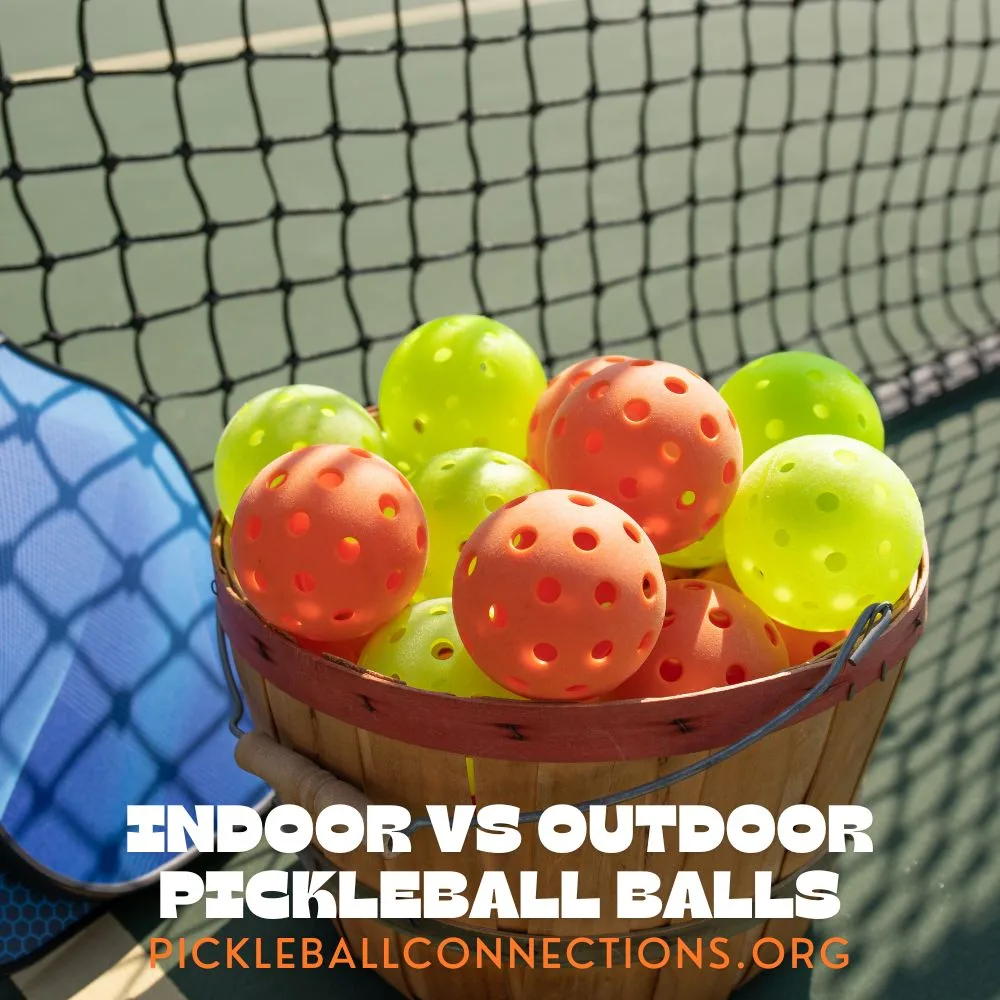
Indoor vs Outdoor Pickleball Balls: Understanding the Differences
Pickleball, a sport that has taken the world by storm, combines elements of tennis, badminton, and table tennis. As its popularity continues to soar in 2024, understanding the nuances between indoor and outdoor pickleball balls has become increasingly important for players of all levels. This article delves into the key differences, performance factors, and considerations when choosing between indoor and outdoor pickleball balls.
Physical Characteristics
The most noticeable difference between indoor and outdoor pickleball balls lies in their physical attributes. Indoor balls typically feature 26 larger holes, while outdoor balls have 40 smaller holes. This difference in hole configuration plays a crucial role in the ball’s flight characteristics and adaptability to various playing conditions.
Hole diameter is another significant factor. Indoor pickleball holes are considerably larger, averaging about 0.43 inches in diameter, compared to outdoor balls with an average hole diameter of 0.282 inches. This 40% size difference affects the ball’s aerodynamics and performance substantially.
Weight variations between indoor and outdoor balls are minimal but can impact gameplay. On average, indoor balls weigh about 0.917 ounces, while outdoor balls weigh 0.925 ounces. This subtle difference influences the ball’s behavior during play, particularly in outdoor conditions where wind resistance is a factor.
Hardness is a crucial characteristic that varies between indoor and outdoor balls. Outdoor balls are typically harder, using materials like high-density polyethylene (HDPE) or polypropylene (PP) to withstand outdoor conditions. Indoor balls, made from softer plastics like low-density polyethylene (LDPE), provide different playing characteristics. The Shore D hardness scale is used to measure and compare the hardness of different pickleball types, with outdoor balls generally scoring higher.
Durability is where indoor and outdoor balls differ significantly. Surprisingly, indoor pickleballs, despite being made of softer plastics, tend to be more durable and have a longer lifespan. Outdoor balls, while designed to withstand harsher conditions, are more prone to cracking and splitting due to their harder composition and exposure to environmental factors like UV rays and temperature fluctuations.
Performance Factors
Bounce characteristics vary between indoor and outdoor pickleballs due to their construction. Indoor balls generally have a higher bounce, which suits the smooth, often wooden surfaces of indoor courts. Outdoor balls have a lower, more controlled bounce that’s better suited for outdoor court surfaces and wind conditions.
The speed and pace of play are significantly affected by the ball type. Indoor balls, being lighter and softer, tend to move faster through the air but slow down more on impact. This characteristic can lead to longer rallies and a different strategic approach. Outdoor balls maintain more consistent speed, even in windy conditions, allowing for more predictable play.
Spin reaction is another crucial difference. Outdoor balls tend to curve more in flight when spin is applied, offering players more control over shot trajectories. Indoor balls, however, react more to spin upon bouncing, creating different challenges and opportunities for players.
Wind resistance is a key factor in outdoor play. Outdoor pickleballs are designed with smaller holes and heavier construction to better resist wind interference. This design allows for more consistent play in varying outdoor conditions. Indoor balls, not needing this feature, are more susceptible to air currents, which is rarely an issue in controlled indoor environments.
Environmental Considerations
Indoor playing conditions offer consistency in lighting, temperature, and lack of wind, allowing for a more controlled game. However, noise levels can be higher indoors due to enclosed spaces, which some players find distracting.
Outdoor play introduces variables such as wind, sun glare, and temperature fluctuations. These factors necessitate the use of specially designed outdoor balls that can withstand and perform well in these conditions. The interaction between outdoor balls and court surfaces like concrete or asphalt also differs from indoor play, affecting strategy and shot selection.
Player Experience and Adaptation
Players often experience a period of adjustment when switching between indoor and outdoor play. This includes adapting to different ball speeds, bounce characteristics, and environmental factors. While challenging, this adaptation process can enhance overall skill development by forcing players to refine their techniques and strategies for different conditions.
Professional players and coaches often have strong preferences for indoor or outdoor play based on their playing style and experience. Their insights can provide valuable guidance for recreational players looking to improve their game in both settings.
Regulations and Standards
The USA Pickleball Association sets specific standards for ball weight, size, and performance characteristics to ensure consistency in competitive play. These regulations apply to both indoor and outdoor balls, with slight variations to account for their different playing environments.
Tournament organizers often specify which balls are approved for use, considering factors like durability, consistency, and adherence to official regulations. Players should be aware of these specifications, especially when participating in competitive events.
Downsides and Considerations
While the differences between indoor and outdoor pickleball balls offer variety in play, they also present some challenges. Players who frequently switch between indoor and outdoor play may find it difficult to maintain consistency in their game due to the significant differences in ball behavior.
The durability issue with outdoor balls can lead to increased costs for frequent players, as these balls may need to be replaced more often than their indoor counterparts. Additionally, the harder composition of outdoor balls can potentially increase the risk of joint stress and injuries, especially for players with pre-existing conditions.
The noise generated by pickleball play, particularly with harder outdoor balls, has become a concern in some communities. This has led to discussions about noise reduction strategies and, in some cases, restrictions on outdoor play in residential areas.
Conclusion
Understanding the differences between indoor and outdoor pickleball balls is crucial for players looking to optimize their performance and enjoyment of the game. Each type of ball offers unique characteristics that can enhance play in their respective environments. While there are some downsides to consider, such as adaptation challenges and potential increased costs, the variety offered by these different ball types contributes to the richness and versatility of pickleball as a sport.
As pickleball continues to evolve, we may see further innovations in ball design aiming to bridge the gap between indoor and outdoor play. For now, players are encouraged to experiment with both types to develop a well-rounded skill set and appreciate the nuances of this rapidly growing sport.
#1 Pickball Paddles Set of 2 | #1 Pickball Paddles Set of 4 | #1 Pickball Single Paddle |
| 3000+ Reviews Free Shipping at Amazon.com | 200+ Reviews Free Shipping at Amazon.com | 800+ Reviews Free Shipping at Amazon.com |
Summary and FAQs
Can I use indoor pickleball balls for outdoor play, or vice versa?
While you technically can use either type of ball in either setting, it’s not recommended. Here’s why:
Using Indoor Balls Outdoors:
- More affected by wind due to larger holes (26 holes vs 40)
- Made of softer plastic (LDPE) that’s not designed for outdoor conditions
- May deteriorate faster from UV exposure and temperature changes
- Will be less predictable in outdoor conditions due to higher bounce characteristics
Using Outdoor Balls Indoors:
- Harder composition might damage indoor court surfaces
- Lower bounce characteristics than ideal for indoor play
- Louder impact noise due to harder material
- Might provide less enjoyable gameplay due to different spin and speed characteristics
The bottom line is that while nothing physically prevents you from using either ball type in either setting, you’ll get the best playing experience by using:
- Indoor balls (26 larger holes, softer material) for indoor courts
- Outdoor balls (40 smaller holes, harder material) for outdoor courts
This is why manufacturers specifically design these balls differently – to optimize performance in their intended environment. Would you like me to elaborate on any specific aspect of these differences?
How do the differences in hole size and number affect the ball’s performance?
The hole size and number create significant performance differences. Let me break this down systematically:
Indoor Balls (26 larger holes, ~0.43 inches diameter):
- Create faster initial ball speed through the air
- Have higher bounce characteristics
- More affected by air currents
- Better suited for controlled indoor environments
- React more to spin upon bouncing
- Slower after impact due to larger air displacement
Outdoor Balls (40 smaller holes, ~0.282 inches diameter):
- Provide better wind resistance due to smaller holes
- Create more consistent flight patterns
- Have lower, more controlled bounce
- Can curve more during flight when spin is applied
- Maintain more consistent speed through their flight path
- Better suited for variable outdoor conditions
The physics behind these differences relates to aerodynamics:
- More holes (outdoor) = better stability in wind
- Larger holes (indoor) = more air interaction = different speed and bounce characteristics
- Hole configuration affects how the ball reacts to spin and air resistance
These design choices aren’t random – they’re specifically engineered to optimize performance in their intended environment. The outdoor ball’s 40 smaller holes help it maintain stability in wind, while the indoor ball’s 26 larger holes provide ideal performance characteristics for controlled indoor conditions.
Are outdoor pickleball balls more durable than indoor balls?
Interestingly, no – outdoor pickleball balls are actually LESS durable than indoor balls, despite being made of harder materials. Here’s the detailed breakdown:
Indoor Balls:
- Made of softer plastics (like LDPE – low-density polyethylene)
- Generally have longer lifespan
- More resilient to repeated impacts
- Less prone to cracking and splitting
- Better durability in controlled conditions
Outdoor Balls:
- Made of harder materials (HDPE or PP – high-density polyethylene or polypropylene)
- More prone to cracking and splitting
- Shorter lifespan
- Affected by environmental factors:
- UV ray exposure
- Temperature fluctuations
- Weather conditions
- Higher replacement frequency needed
This creates an interesting paradox: despite outdoor balls being harder and seemingly more robust, they typically need to be replaced more often. This leads to higher ongoing costs for outdoor players.
The article suggests this is because the harder composition of outdoor balls, while necessary for outdoor play characteristics, makes them more brittle and susceptible to damage from environmental stresses and impact. The softer, more flexible nature of indoor balls actually helps them absorb impacts better and last longer in their intended environment.
How does the choice between indoor and outdoor balls affect gameplay and strategy?
The choice of ball significantly impacts gameplay and strategy in several key ways:
Indoor Balls:
- Speed Characteristics:
- Move faster through the air initially
- Slow down more upon impact
- Lead to longer rallies
- Bounce Behavior:
- Higher bounce
- More reactive to spin after bouncing
- Better suited for wooden/smooth surfaces
- Strategic Implications:
- May favor faster-paced play
- More predictable in controlled environments
- Different spin tactics needed due to bounce characteristics
Outdoor Balls:
- Speed Characteristics:
- More consistent speed throughout flight
- Less affected by wind due to design
- Maintain steadier pace during play
- Bounce Behavior:
- Lower, more controlled bounce
- More curve during flight when spin is applied
- Adapted for outdoor court surfaces
- Strategic Implications:
- Requires adaptation to wind conditions
- Better for controlled shots
- Different spin strategies needed during flight
Player Adaptation:
- Need to adjust techniques when switching between indoor/outdoor play
- May affect shot selection and court positioning
- Can enhance overall skill development by forcing versatility
- Professional players often develop preferences based on playing style
Environmental Impact on Strategy:
- Indoor: Focus on pure technique due to controlled conditions
- Outdoor: Must account for:
- Wind factors
- Sun glare
- Temperature effects
- Court surface differences
This diversity in play characteristics explains why tournament organizers often specify which balls are approved for use, as the choice significantly affects how the game is played.
Are there any health or community concerns related to indoor vs outdoor pickleball balls?
There are several health and community concerns that differ between indoor and outdoor pickleball balls:
Health Concerns:
- Outdoor Balls:
- Harder composition may increase joint stress
- Higher risk of injury for players with pre-existing conditions
- Impact force is greater due to harder material
- Indoor Balls:
- Generally softer impact
- May be easier on joints
- Less physical stress during play
Community Concerns:
Noise Issues:
- Indoor Setting:
- Higher noise levels due to enclosed spaces
- Sound can be more concentrated/echoing
- Can be distracting for players
- Outdoor Setting:
- Harder balls generate more noise
- Has become a community concern in residential areas
- Has led to:
- Discussions about noise reduction strategies
- Some restrictions on outdoor play
- Community debates about court locations
Environmental Impact:
- Outdoor balls need more frequent replacement
- Creates more plastic waste
- Higher ongoing costs
- Environmental sustainability concerns
Community Solutions:
- Some areas implementing noise reduction strategies
- Discussion of court placement away from residential areas
- Consideration of playing times and restrictions
- Balance between sport accessibility and community impact
These concerns have become increasingly important as pickleball continues to grow in popularity, particularly in residential areas where courts are often located close to homes.


