Pickleball Scoring Rules | Best Pickleballs
Pickleball scoring rules are unique and crucial for enjoying this rapidly growing sport. Games are typically played to 11 points (win by two), with only the serving team able to score. Doubles use a three-number scoring system (serving team’s score, receiving team’s score, server number), while singles use a two-number system. Player positioning is determined by the score, with even scores corresponding to the right side of the court and odd scores to the left.
The “Kitchen” rule restricts volleyplay near the net, adding strategic depth. Common scoring mistakes include forgetting the score and confusion in doubles rotation. Advanced concepts like stacking can complicate scorekeeping but offer strategic advantages. While the scoring system adds unique elements to the game, it can be complex for beginners and potentially lead to longer games. Despite these challenges, understanding pickleball scoring is essential for fully enjoying and excelling at this dynamic and engaging sport.
#1 Pickball Paddles Set of 2 | #1 Pickball Paddles Set of 4 | #1 Pickball Single Paddle |
 3000+ Reviews Free Shipping at Amazon.com |  200+ Reviews Free Shipping at Amazon.com |  800+ Reviews Free Shipping at Amazon.com |

Pickleball Scoring Rules: A Comprehensive Guide
Pickleball, a fast-growing paddle sport that combines elements of tennis, badminton, and table tennis, has gained immense popularity in recent years. As of 2024, it’s estimated that over 36 million Americans play pickleball, making it one of the fastest-growing sports in the country. Understanding the scoring rules is crucial for enjoying and excelling at this dynamic game.
Basic Scoring Rules
The standard pickleball game is played to 11 points, with players needing to win by two points. In tournament play, games may be extended to 15 or 21 points, still requiring a two-point lead to win. One of the unique aspects of pickleball is that only the serving team can score points. This rule adds a strategic element to serving and receiving, as teams must capitalize on their serving opportunities to advance their score.
Doubles vs. Singles Scoring
Pickleball can be played as doubles or singles, with each format using a slightly different scoring system. In doubles, a three-number scoring system is used, while singles employs a two-number system.
Doubles Scoring (Three-Number System):
The score is called as three numbers: the serving team’s score, the receiving team’s score, and server number (1 or 2). For example, “4-3-2” means the serving team has 4 points, the receiving team has 3, and it’s the second server’s turn.
Singles Scoring (Two-Number System):
In singles, only two numbers are called: the server’s score followed by the receiver’s score. For instance, “4-3” means the server has 4 points and the receiver has 3.
Serving and Scoring
The serving team in pickleball has a significant advantage, as they are the only ones who can score points. When the serving team commits a fault, it results in a “side out,” where the serve passes to the opposing team. This system ensures that serving opportunities alternate between teams.
In doubles, each team gets two serves (one per player) before a side out occurs, except for the first serving team of the game, which only gets one serve. This rule, known as the “double bounce” or “two bounce” rule, helps to even out the initial advantage of serving.
In singles, each player serves until they lose a rally, resulting in a side-out. The server alternates between the right and left sides of the court based on their score.
Player Positioning and Court Sides
Player positions are determined by the score. The right side of the court is considered the “even” side, while the left is the “odd” side. Even-numbered scores mean the player starts on the right side of the court, while odd-numbered scores mean starting on the left. Players on the serving team switch sides of the court each time they score a point, ensuring that serves alternate between the right and left sides.
The “Kitchen” Rule
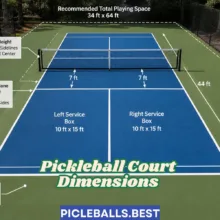
The 7-foot non-volley zone near the net, known as the “Kitchen,” restricts volley play and significantly impacts scoring strategies. Players cannot volley (hit the ball out of the air) while standing in or touching the kitchen line. This rule adds complexity to the game and forces players to be strategic about their positioning near the net.
Common Scoring Mistakes and How to Avoid Them
- Forgetting the score: This is a frequent issue, especially for beginners. Regularly verbalizing the score and using visual cues can help players remember.
- Confusion in doubles rotation: Players sometimes lose track of which partner should serve or receive. Establishing clear communication and pre-serve routines can mitigate this.
- Misunderstanding side out rules: Some players forget that only the serving team can score. Familiarizing oneself with the side-out concept is crucial for proper gameplay.
- Incorrect player positioning: Players sometimes line up on the wrong side of the court. Associating even scores with the right side and odd scores with the left side can help prevent this.
Advanced Scoring Concepts: Stacking
Stacking is an advanced strategy where doubles partners maintain their preferred sides of the court regardless of the score, requiring quick position switches before and after serves. Teams might stack to keep a left-handed player on one side, to protect a weaker backhand, or to match up against specific opponents. While effective, stacking can complicate scorekeeping and requires clear communication between partners to ensure proper positioning for each serve and return.
Scoring in Tournament Play
In official tournaments, referees keep track of the score, call out the score before each serve, and make final decisions on disputed points. Players can ask referees about the current score, correct server/receiver, and if they’re in the correct position. Challenges to incorrect score calls must be made before the third shot of a rally. After that, the rally stands regardless of whether the called score was correct.
Technology and Scoring
As pickleball continues to grow, technology has been integrated to assist with scoring. Many facilities now use digital scoreboards, which can help reduce scoring disputes and errors. Various smartphone apps are also available to help track scores and even provide statistical analysis of games.
Potential Downsides of the Scoring System
While the pickleball scoring system adds unique strategic elements to the game, it does have some potential drawbacks:
- Complexity for beginners: The three-number system in doubles can be confusing for new players, potentially discouraging some from continuing with the sport.
- Longer games: Because only the serving team can score, games can sometimes last longer than in sports where both teams can score on every rally.
- Serving advantage: The rule that only the serving team can score gives a significant advantage to the serving team, which some argue can make the game less balanced.
- Potential for disputes: With players responsible for keeping their own score in recreational play, there’s potential for disagreements, especially in close games.
Despite these potential downsides, the unique scoring system in pickleball contributes significantly to the sport’s strategic depth and excitement. As the sport continues to evolve, it’s possible that scoring rules may be adjusted to address some of these issues while maintaining the core elements that make pickleball unique and engaging.
In conclusion, understanding pickleball scoring rules is essential for enjoying and excelling at the game. While the system may seem complex at first, with practice, it becomes second nature, allowing players to focus on the fun and competitive aspects of this rapidly growing sport.
#1 Pickball Balls | #1 Pickball Bag | #1 Pickball Portable Net |
 19500+ Reviews Free Shipping at Amazon.com |  2600+ Reviews Free Shipping at Amazon.com |  1800+ Reviews Free Shipping at Amazon.com |
Summary and FAQs
Why does only the serving team score points in pickleball?
The serving-only scoring system in pickleball serves several strategic purposes. Here’s why this rule exists:
Strategic Depth
- Creates a risk-reward dynamic where serving teams must capitalize on their serving opportunities
- Makes service games more meaningful and intense
- Forces receiving teams to play strategically to earn the right to serve
Historical Context
- This scoring system is borrowed from traditional volleyball
- It’s part of what makes pickleball unique among racquet sports
- Distinguishes it from tennis and badminton where either side can score
Game Flow Benefits
- Helps maintain a natural rhythm to the game
- Creates clear momentum shifts when “side outs” occur
- Makes serving rotation and tracking more organized
Challenge Level
- Adds difficulty since teams must execute well on their service games
- Creates comeback opportunities for trailing teams
- Makes winning points feel more meaningful and earned
While this system can potentially lead to longer games (as noted in the article’s “Potential Downsides” section), it’s considered a fundamental aspect of what makes pickleball tactically interesting and unique as a sport.
How does the three-number scoring system work in doubles pickleball?
The three-number scoring system in doubles pickleball works as follows:
The Three Numbers Represent:
- First number: Serving team’s score
- Second number: Receiving team’s score
- Third number: Server number (1 or 2)
Example Call:
- “4-3-2” means:
- Serving team has 4 points
- Receiving team has 3 points
- It’s the second server’s turn
Key Rules:
- Each team gets two serves (one per player) before a side-out
- Exception: The first serving team of the game only gets one serve
- Teams must keep track of which partner is Server 1 and Server 2
How It Changes:
- The numbers update after each point
- When a side-out occurs, the serving team becomes the receiving team
- The server number changes when the first server loses their serve
This is different from singles play, which uses a simpler two-number system (just the server’s score followed by the receiver’s score).
What is “stacking” in pickleball and how does it affect scoring?
Stacking is an advanced pickleball strategy that affects player positioning while following scoring rules. Here’s a breakdown:
Basic Definition:
- A strategy where doubles partners maintain their preferred court sides
- Requires quick position switches before and after serves
- Overrides the normal even/odd positioning rules
Main Purposes:
- Keep a left-handed player on their preferred side
- Protect a player’s weaker backhand
- Create favorable matchups against specific opponents
Strategic Implications:
- Partners can maintain their strongest positions regardless of score
- Allows teams to maximize their strengths
- Requires coordinated movement between points
Scoring Complications:
- Makes scorekeeping more complex
- Demands clear communication between partners
- Partners must still ensure proper positioning for serves/returns
- Must comply with all standard scoring rules despite modified positioning
Implementation Challenges:
- Requires excellent court awareness
- Partners need strong communication
- Teams must quickly adjust positions while maintaining legal serve positions
- More complex than traditional positioning
While stacking adds complexity to the game’s scoring system, it’s considered a valuable competitive strategy for teams looking to maximize their effectiveness on the court.
How do I know which side of the court to serve from?
Determining which side to serve from in pickleball follows a straightforward even/odd system:
Basic Rule:
- Even scores = serve from the right side
- Odd scores = serve from the left side
Court Sides:
- Right side = “even” side
- Left side = “odd” side
- This applies to the server’s own score only
Position Changes:
- Players on serving team switch sides each time they score
- This ensures serves alternate between right and left sides
- Movement happens after each point scored by serving team
Quick Memory Tips:
- Right = Even (both have letter ‘r’)
- Left = Odd (both have letter ‘t’)
- Always based on serving team’s score only
- Ignore receiving team’s score when determining position
Example:
- If serving team’s score is 4 = serve from right side
- If serving team’s score is 5 = serve from left side
- Continues this pattern throughout the game
This positioning system is fundamental to proper pickleball play, though it can be modified by advanced strategies like stacking while still maintaining legal serve positions.
What happens if a wrong score is called during a game?
Here’s how incorrect score calls are handled in pickleball:
Tournament Play Rules:
- Players can challenge incorrect score calls
- Must be challenged before the third shot of the rally
- After the third shot, the rally result stands regardless of score call accuracy
- Referees make final decisions on disputed points
Recreational Play Issues:
- Common source of disputes in self-officiated games
- Players are responsible for keeping their own score
- Can lead to disagreements, especially in close games
Prevention Methods:
- Regularly verbalize the score
- Use visual cues to help remember
- Establish clear communication between players
- Pre-serve routines can help maintain accuracy
Technology Solutions:
- Digital scoreboards help reduce scoring disputes
- Smartphone apps available for score tracking
- These tools can help minimize scoring errors
Best Practices:
- Call score clearly before each serve
- If unsure, stop and confirm score with all players
- Better to resolve score issues before continuing play
- Maintain good communication with all players