How to Serve in Pickleball | Best Pickleballs
Serving in pickleball is a fundamental skill that initiates every point. Unlike other racquet sports, the pickleball serve is designed to start rallies rather than be an offensive weapon. The article covers essential aspects of serving, including rules, types of serves, and techniques. It emphasizes the importance of underhand motion, proper foot placement, and landing the serve in the diagonal court. Various serve types are discussed, such as the traditional volley serve and the newer drop serve.
The guide provides tips for beginners and advanced strategies for experienced players, including spin serves and tactical placement. It also addresses common faults, practice drills, equipment considerations, and the psychological aspects of serving. The article highlights the differences in serving strategies for singles and doubles play and emphasizes the continuous process of improving one’s serve through analysis and feedback. Overall, it provides a comprehensive overview of mastering the art of serving in pickleball.
#1 Pickball Paddles Set of 2 | #1 Pickball Paddles Set of 4 | #1 Pickball Single Paddle |
 3000+ Reviews Free Shipping at Amazon.com |  200+ Reviews Free Shipping at Amazon.com |  800+ Reviews Free Shipping at Amazon.com |

Mastering the Art of Serving in Pickleball: A Comprehensive Guide
Pickleball, the fast-growing sport that combines elements of tennis, badminton, and table tennis, has captured the hearts of players across all age groups. At the core of this exciting game lies the serve – the crucial shot that initiates every point. Unlike many racquet sports where serves are powerful offensive weapons, pickleball’s serve is designed primarily to start the rally. However, mastering the serve can give players a significant advantage, making it an essential skill to develop.
The Evolution of Pickleball Serving
Since its inception in the 1960s, pickleball has undergone numerous rule changes, particularly regarding the serve. The most recent significant change came in 2021 with the introduction of the “drop serve” and the elimination of let serves. These modifications aimed to simplify the game and reduce disputes, making it more enjoyable for players and easier for referees to officiate.
Understanding Pickleball Serving Rules
Pickleball serving rules are specific and must be followed strictly to avoid faults. The fundamental rules include:
- Underhand motion: The serve must be made with an underhand stroke, with the contact point below the server’s waist.
- Paddle position: The paddle head must be below the wrist at the point of contact.
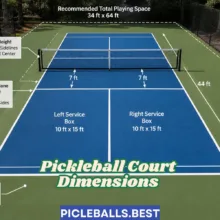
- Foot placement: At least one foot must be behind the baseline, and both feet must be within the imaginary extensions of the sideline and centerline.
- Service court: The serve must land in the diagonally opposite service court, clearing the non-volley zone (kitchen).
- No-let rule: As of 2021, serves that touches the net and land in the correct service court are considered valid and play continues.
Types of Pickleball Serves
Pickleball offers various serve types, each with its advantages:
- Traditional volley serve: The most common serve, involves striking the ball in mid-air with an underhand motion.
- Drop serve: A newer addition allowing players to drop the ball and hit it after a bounce.
- Power serve: Focuses on speed and depth to keep opponents back.
- Spin serve: Adds rotation to the ball, making it harder to return.
- Lob serve: Aims high and deep into the opponent’s court.
Advanced players often mix these serve types to keep opponents guessing and gain a strategic advantage.
Fundamental Serving Technique
Mastering the fundamental serving technique is crucial for consistency and effectiveness. Key elements include:
- Grip: Typically a continental or eastern grip for most serves.
- Stance: Balanced, with feet correctly positioned behind the baseline.
- Ball toss/drop: Low and consistent for volley serves; steady drop from any height for drop serves.
- Contact point: Below the waist, with the paddle moving in an upward arc.
- Follow-through: Proper follow-through enhances accuracy and power.
- Footwork: Often overlooked but crucial for balance and power generation.
Serving Sequence and Positioning
In doubles play, the serving sequence follows a specific order. The server must call the score before serving, announcing the serving team’s score, the receiving team’s score, and the server number (1 or 2). The server positions behind the baseline, while their partner can stand anywhere but typically stays back. The receiving team positions with one player in the receiving court and the other at the non-volley zone line.
After the serve, both teams must adhere to the double bounce rule, where each side must let the ball bounce once before volleys are allowed.
Advanced Serving Strategies
As players progress, serving becomes more strategic. Advanced techniques include:
- Varying serve types to keep opponents off-balance.
- Incorporating spin (topspin, backspin, sidespin) to add complexity to returns.
- Tactical placement, such as serving deep to keep receivers back or targeting an opponent’s weaker side.
- Reading opponent positioning and adjusting serves accordingly.
- Disguising serve intentions by maintaining consistent body language.
- Adapting serves to different playing surfaces (indoor vs. outdoor).
Common Serving Faults and How to Avoid Them
Awareness of common serving faults can help players improve their game:
- Foot faults: Stepping on or over the baseline.
- Illegal serving motions: Hitting the ball above the waist.
- Wrong player serving in doubles.
- Serves landing out of bounds.
- Inconsistent ball tosses or drops.
- Improper contact points.
- Lack of follow-through.
- Over-relying on power at the expense of control.
To avoid these faults, focus on proper technique, practice consistently, and prioritize accuracy over power, especially when learning.
Practice Drills to Improve Your Serve
Dedicated practice is key to improving your serve. Effective drills include:
- Accuracy drills: Aim for specific targets in the service court.
- Power development drills: Generating more speed while maintaining control.
- Spin control exercises: Mastering different types of spin serves.
- Pressure situation simulations: Serving under match-point conditions to improve composure.
Equipment Considerations
The choice of equipment can impact your serve. Different paddle weights, shapes, and materials affect serve power and control. Generally, heavier paddles offer more power, while lighter ones provide better control. The texture of the paddle face can influence the amount of spin you can generate.
Adapting Your Serve for Doubles vs. Singles Play
Serving strategies differ between doubles and singles play. In doubles, servers often aim to keep the ball low and deep, preventing the receiving team from attacking. In singles, a wider variety of serves can be effective due to the larger court area to cover. Adapting your serve based on the game type can provide a strategic advantage.
The Psychology of Serving
The mental aspect of serving is often underestimated. Building confidence through consistent practice and positive self-talk is crucial. Handling pressure during key points involves breathing techniques and maintaining focus on the process rather than the outcome. Developing mental strategies, such as visualization and routine-building, can lead to more consistent serving under various conditions.
Analyzing and Improving Your Serve
Continuous improvement comes from regular analysis and feedback. Video analysis can reveal technical issues not easily noticed during play. Seeking feedback from partners, coaches, or more experienced players can provide valuable insights. Tracking serve statistics can help identify areas for improvement and measure progress over time.
Downsides and Challenges
While mastering the serve in pickleball can significantly improve your game, there are some potential downsides to consider:
- Over-reliance on a strong serve: Players may become too dependent on their serve, neglecting other aspects of their game.
- Risk of injury: Repetitive serving motions can lead to shoulder or arm injuries if proper technique is not maintained.
- Adaptation to rule changes: As the sport evolves, players may need to adapt their serving techniques to comply with new rules.
- Limited offensive potential: Unlike tennis, pickleball serves are not designed to be offensive weapons, which may frustrate players transitioning from other racquet sports.
Conclusion
Developing a strong serving game in pickleball is a continuous process that requires dedication, practice, and adaptability. By understanding the rules, mastering various serve types, and implementing advanced strategies, players can gain a significant advantage on the court. Remember to set specific, achievable goals for serve improvement and integrate serve practice into your overall training regimen. Stay updated with rule changes and always prioritize consistency and accuracy over power. With time and effort, your pickleball serve can become a reliable asset in your game, providing a solid foundation for point-winning opportunities.
#1 Pickball Balls | #1 Pickball Bag | #1 Pickball Portable Net |
 19500+ Reviews Free Shipping at Amazon.com |  2600+ Reviews Free Shipping at Amazon.com |  1800+ Reviews Free Shipping at Amazon.com |
Summary and FAQs
What is the correct way to perform a legal serve in pickleball?
Here are the key requirements for a legal serve:
Essential Motion Requirements:
- Must use an underhand stroke
- Contact point must be below the server’s waist
- Paddle head must be below the wrist when hitting the ball
Positioning Rules:
- At least one foot must stay behind the baseline
- Both feet must remain within the imaginary extensions of:
- The sideline
- The centerline
Service Method Options:
- Traditional volley serve: Hitting the ball in mid-air with underhand motion
- Drop serve: Dropping the ball and hitting after bounce (added in 2021)
Service Court Requirements:
- Ball must land in the diagonally opposite service court
- Must clear the non-volley zone (“kitchen”)
- If the ball hits the net and lands in correct service court, play continues (no-let rule as of 2021)
Recommended Technique Elements:
- Maintain a balanced stance
- Use continental or eastern grip
- Execute proper follow-through
- Focus on consistency and control over power
- Keep ball toss/drop steady and consistent
What is the difference between a volley serve and a drop serve in pickleball?
Here are the key differences between volley serves and drop serves in pickleball:
Volley Serve (Traditional):
- Ball is struck directly in mid-air
- Ball must be hit with an underhand motion
- Requires more precise timing and coordination
- Most commonly used serve type
- Ball must be contacted below waist height
Drop Serve:
- Player drops the ball and hits it after it bounces
- Can be dropped from any height
- Simpler timing since you hit after the bounce
- Added to simplify the game and reduce disputes
- More beginner-friendly option
- Still must be hit with underhand motion below waist
The main practical differences are:
- Point of contact (mid-air vs after bounce)
- Timing requirements (immediate hit vs hitting after bounce)
- Height restrictions (only on contact point, not on initial drop for drop serve)
The drop serve was introduced to make the game more accessible and reduce controversial calls, while still maintaining the fundamental underhand nature of pickleball serves. Would you like me to explain more about the strategic advantages of each serve type?
How can I improve the accuracy of my pickleball serve?
Based on the article, here’s a comprehensive approach to improving your pickleball serve accuracy:
Focus on Fundamental Technique:
- Maintain a consistent grip (continental or eastern recommended)
- Use a balanced stance
- Develop a steady ball toss/drop
- Follow through properly with each serve
- Prioritize control over power
Practice Drills:
- Set up specific targets in the service court
- Practice serving to different zones
- Simulate pressure situations (like match points)
- Focus on repetition and consistency
- Track your accuracy statistics to measure improvement
Common Mistakes to Avoid:
- Don’t step over the baseline (foot fault)
- Avoid illegal serving motions above waist
- Don’t sacrifice accuracy for power
- Watch for inconsistent ball tosses/drops
- Maintain proper contact point
Strategic Improvements:
- Start with mastering basic placement before adding power
- Practice serving to both sides of the service court
- Work on varying serve placement to keep opponents guessing
- Focus on deep serves to keep receivers back
- Target opponent’s weaker side
Mental Approach:
- Develop a consistent pre-serve routine
- Use visualization techniques
- Practice breathing techniques for pressure situations
- Build confidence through regular practice
- Focus on process rather than outcome
Are there any strategic considerations for serving in doubles versus singles pickleball?
Yes, there are distinct strategic considerations for serving in doubles versus singles pickleball:
Doubles Serving Strategy:
Placement Priorities:
- Focus on deep serves to keep receivers back
- Keep serves low to prevent aggressive returns
- Target the middle to create confusion between partners
Tactical Considerations:
- Be mindful of both opponents’ positions
- Follow proper serving sequence (calling score and server number)
- Partner positioning is important (typically stays back)
- Work with your partner’s strengths for post-serve positioning
Singles Serving Strategy:
Court Coverage:
- More serving options available due to larger area to cover
- Can exploit wider angles
- More variety in serve types can be effective
- Greater court space to defend after serve
Common Strategies for Both:
Advanced Techniques:
- Mix up serve types to keep opponents guessing
- Use spin (top, back, side) strategically
- Read opponent positioning
- Disguise serve intentions
- Adapt to playing surface conditions
Key Differences to Consider:
- Doubles requires more coordination with partner
- Singles allows for more aggressive serving strategies
- Court coverage responsibilities differ significantly
- Risk/reward calculations vary between formats
What are some common serving faults in pickleball and how can I avoid them?
Based on the article, here’s a comprehensive breakdown of common serving faults and their solutions:
Foot Faults
Problem: Stepping on or over the baseline
Prevention:
- Practice proper stance positioning
- Stay conscious of foot placement
- Keep at least one foot behind the baseline
- Position yourself with enough space from the line
Illegal Serving Motions
Problem: Hitting the ball above waist height
Prevention:
- Keep contact point below waist
- Ensure paddle head stays below wrist
- Maintain proper underhand motion
- Practice correct form consistently
Sequence Errors
Problem: Wrong player serving in doubles
Prevention:
- Call out score before each serve
- Track serving order carefully
- Communicate clearly with partner
- Announce server number (1 or 2)
Placement Errors
Problem: Serves landing out of bounds
Prevention:
- Focus on accuracy over power
- Aim well within court boundaries
- Practice with specific targets
- Develop consistent technique
Technical Faults
Problems:
- Inconsistent ball tosses/drops
- Improper contact points
- Lack of follow-through
- Over-reliance on power
Prevention:
- Practice basic technique regularly
- Focus on smooth, controlled motions
- Develop consistent routine
- Prioritize control over speed